
What we’re reading
Dayhouse Living · Edition 02 · October 2026

Editor’s note
Dayhouse Living
Full magazine issues of Dayhouse Living are paused for now.
This desk is still open.
While we rest the long issues, we’re sharing what we’re reading for the year ahead—design, interiors, architecture, and wellness-design pieces that speak to the Dayhouse thesis: fitted design, biophilic becoming therapeutic, and home as agent. Light, sound, scent, and material are not décor extras. They’re how a nervous system decides whether a room is safe enough to settle.
We are not stacking clinical papers here. That work lives elsewhere. This page is for the design press—editors and practitioners who are already drifting toward the same question we ask every day: How does your body feel when you walk in?
Calm is not one setting
This month the design press kept circling one idea we live by: there is no universal calm room. There is the room fitted to the body living in it.
designinglighting
Circadian light doesn’t have to be fancy
“Video: Mariana Figueiro: Stop Talking About Circadian Lighting and Just Do It”Randy Reid · Sep 23, 2026
Nine at night, the overhead fixture still blazing white, and you’re reading about sleep on your phone under it. In this interview from the ArchLIGHT Summit, Mariana Figueiro, who directs the Light and Health Research Center at Mount Sinai’s Icahn School of Medicine, says the industry got stuck: circadian lighting became shorthand for tunable lighting, the metrics piled up, and designers stopped acting. Her fix is plain. Work in lux, use daylight, use furniture placement and simple choices. Her words: “You can do better than what they’re doing right now without having to be fancy.”
Why it matters for DayhouseA circadian home is a matter of timing and placement—bright where you start the day, dim and warm where you end it—not a product you buy. That’s fitted design at its most ordinary, and its most powerful.
Read at designinglighting →Journal of Biophilic Design
A calm room for one body is a waiting room for another
“Designing for Human Flourishing – How Biophilic Design supports Neuroinclusivity”Vanessa Champion · Sep 10, 2026
Some of us walk into a hushed beige room and finally exhale. Others feel the walls go flat and the restlessness start. Written ahead of the Neuroplaces show at London Design Festival, this piece says it straight: “human beings are not standardised — and our environments shouldn’t be either.” A space designed only to reduce stimulation can limit as much as one that overwhelms. The answer is choice—quiet rooms and social rooms, planting that offers refuge while keeping the view out, and light and color people can adjust.
Why it matters for DayhouseThis is our thesis, said by the biophilic press. Design isn’t universal; it’s fitted. Nature in a room isn’t a sedative. It’s a range—restoration on one end, fascination on the other—and the work is tuning it to the person.
Read at Journal of Biophilic Design →human beings are not standardised — and our environments shouldn’t be either.
designboom
A lampshade grown in ten days that also drinks sound
“mushlume co-creates with living organisms to grow design objects at MADE: bush terminal”Mariana Rodrigues · Sep 17, 2026
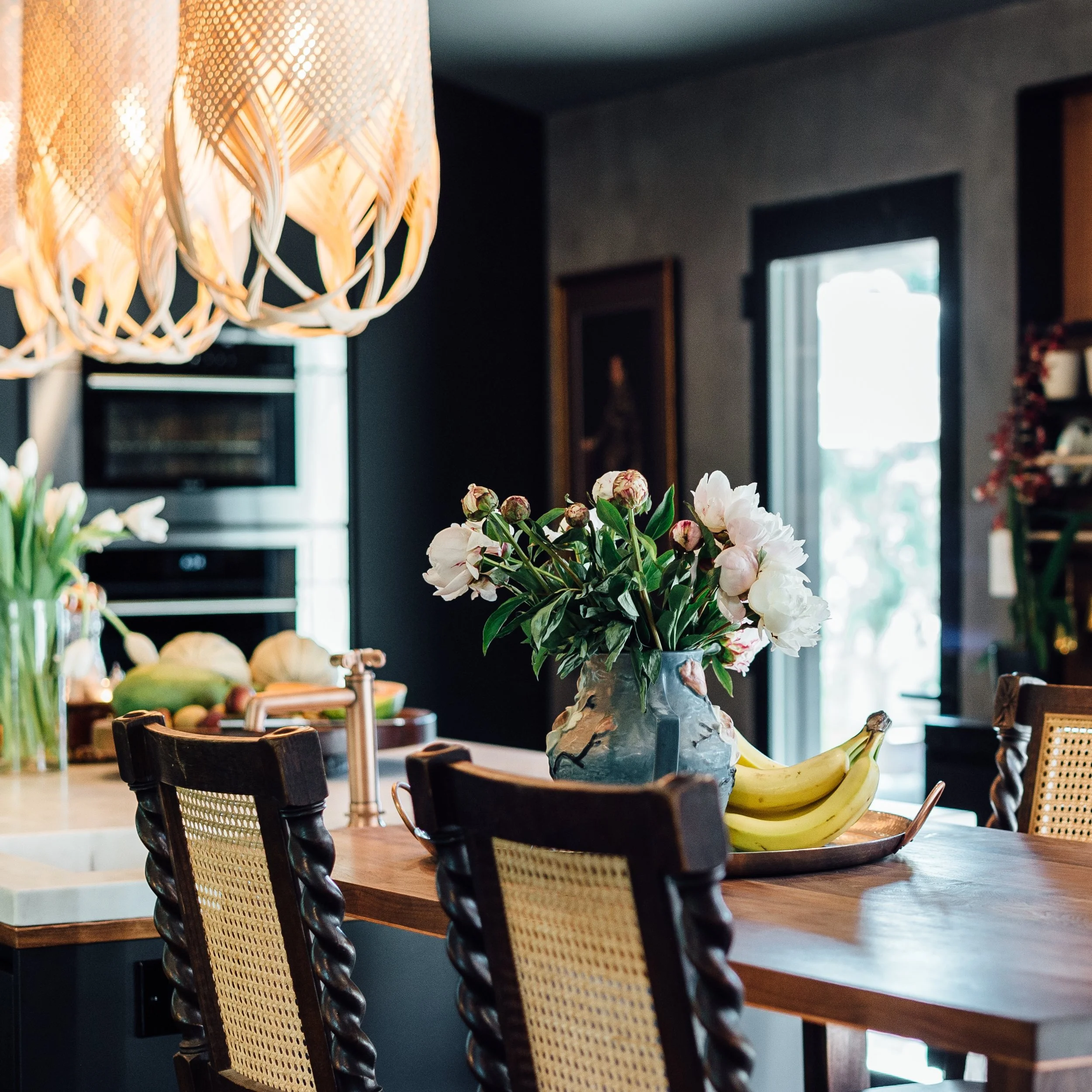
A pendant over the dining table that softens the glare and the clatter at the same time. Designer Danielle Trofe’s MushLume grows lampshades and acoustic panels from living mycelium and hemp waste—most shades in seven to ten days. The porous material absorbs sound, and its Class A fire rating comes from mycelium’s natural fire resistance, without synthetic chemical flame retardants. Trofe calls it “a compostable, non-toxic material that doesn’t off-gas.”
Why it matters for DayhouseOne object handling two stressors—harsh light and echo—without adding a chemical load to the air. That’s what we mean by living materials as therapeutic design: the room quietly does work so the body doesn’t have to.
Read at designboom →designboom
Paper walls that soften daylight instead of blocking it
“ancient korean hanji paper transformed into sustainable biomaterials at maison&objet 2026”Mariana Rodrigues · Sep 10, 2026
Afternoon sun hits a white wall and your eyes flinch before you’ve even sat down. At Maison&Objet, the Korea Craft & Design Foundation’s Hanji House reworked thousand-year-old mulberry-bark paper into luminous partitions, curved lights, and an interior skin that diffuses light, in a pavilion designed around soft translucency and airflow.
Why it matters for DayhouseFor a light-sensitive body, the difference between glare and glow is the difference between a room you can stay in and one you leave. Diffusion is a design tool, and a plant-based one that lets daylight in without the sting is exactly the kind of material we watch for.
Read at designboom →Dwell
Thresholds you can see through
“All of the Partitions in This Art Collector’s Taiwan Apartment Are Translucent”Grace Bernard · Sep 15, 2026
One person, 1,292 square feet, and a home that still knows where public ends and private begins. Habitat Architects opened the main living area of this Taoyuan apartment, then enclosed the bathrooms in glass brick, closed off the office with a folding door of frosted panels, and used a change in floor finish to mark the step from shared space into private.
Why it matters for DayhouseRooms that hold don’t have to go dark. A frosted door keeps the daylight and drops the visual noise; a shift underfoot tells your body you’ve crossed into somewhere quieter. This home is fitted to one person’s life, not to a listing photo.
Read at Dwell →Architectural Digest
“The home is becoming quieter”
“10 Designers Share the Trends Defining Dwellings of Tomorrow”Mary Holland · Jun 16, 2026
Read these ten predictions back to back and you start to hear a nervous system talking. Harry Nuriev of Crosby Studios: “The home is becoming quieter,” with spaces “less visually busy and more emotionally clear.” David Flack: “You want to walk in your house and it feels good. Why does it feel good? Because it doesn’t overwhelm you.” Britt Moran of Dimorestudio: “The home becomes less about division and more about calibrated distances.”
Why it matters for DayhouseThe AD100 is describing body stakes in design language. “Calibrated distances” is a beautiful name for what we do in every plan: setting how close, how bright, and how loud each part of a home should be for the person who lives there.
Read at Architectural Digest →The home becomes less about division and more about calibrated distances.
Archive
Earlier editions
Edition 01 · September 2026 — Design trends for a fitted, therapeutic home
- “8 Lighting Trends Experts Say Will Dominate 2026” · Veranda
- “Biophilic Design Trends to Watch in 2026” · Design Middle East
- “The Renovations Designers Want to See You Make in 2026” · Domino
- “Spinneybeck Turns Eelgrass Offcuts Into Modular Acoustic Wall Tiles” · Design Milk
- “Open-Concept Living Has a Problem. The ‘Quiet Room’ Is the Fix” · Los Angeles Times
- “Build It Better: The Materials That Make a Healthier Home” · Architectural Digest
Method
How we pick
We read for body stakes, not trend bingo.
A piece lands on this desk when it connects to at least one Dayhouse lane: circadian or human-centric light; sensory or neuro-aware interiors (in design press, not journals); biophilic materials as nervous-system comfort; acoustic or scent-conscious rooms; low-tox finishes; rooms that hold / prospect-refuge; color and tactility beyond millennial beige.
We paraphrase stakes in our own voice. We don’t invent quotes. We don’t dress clinical papers as Living reading. If it could sit on a generic wellness brand without naming the house as agent, it doesn’t make the cut.
Stay with Living
Full issues are paused. This reading desk is how we keep the conversation going.
Subscribe for the next edition of What we’re reading (and word when Living returns).
← Back to Dayhouse Living
Dayhouse Living shares design reading for homes that heal. This is not medical advice.