Painting Life Back into White Walls
Painting Life Back into White Walls is a Dayhouse Living Issue 3 article from Dayhouse Studio on painting life back into white walls with color and biophilic cues. Complementary to medical care, not a substitute. Based in Salt Lake City, we share science-backed ideas for restorative living.
Written by Ozge Fettahlioglu
At three o’clock in the morning, hospitals exist in a kind of static limbo. The air is sharp with cold, and the fluorescent lights overhead cast a clinical, unfeeling glow over the hallway. I spent too many nights in that liminal space — slipping out of my sister’s room so she could sleep, wandering the cancer ward while the rest of the world found its slumber. She was fighting stage 4 osteosarcoma, tethered to experimental treatments that left her immune system fragile. No visitors were allowed in her room unless it was essential. And yet, paradoxically, I felt more helpless standing outside that door than I ever did by her bedside.
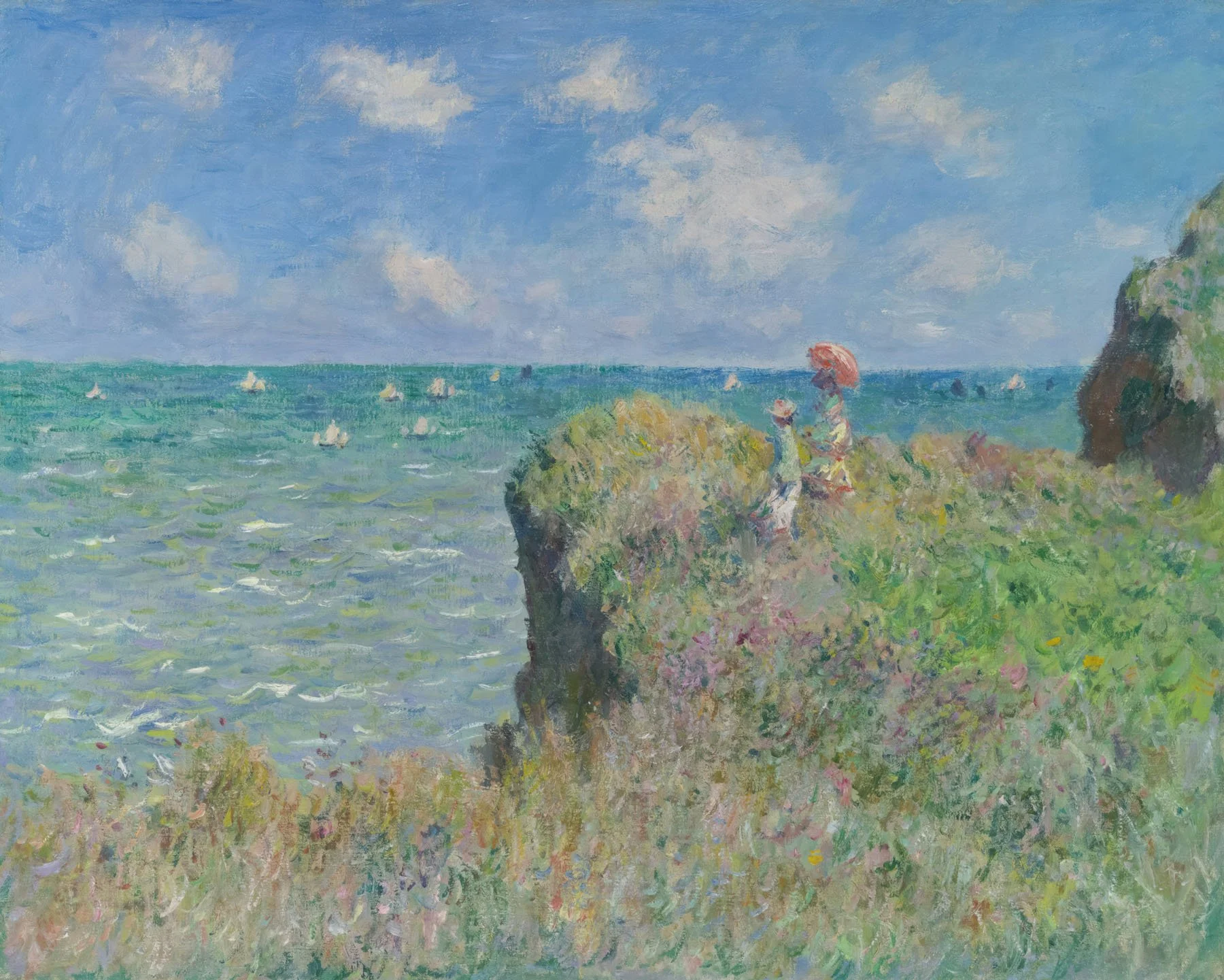
These walls were brutal in their whiteness, reminiscent of an empty canvas that refused to grant any hope. Except for one tiny oasis: a small Monet print tucked away near the waiting area. I don’t remember the name of the painting — only that it captured a haze of colour, water lilies floating on the surface of an unknown pond. That Monet became my lifeline. While my sister teetered between life and death, I craved anything that reminded me the world could still be gentle, that colour still existed somewhere outside of IV drips and sterile gloves.
Little did I know at the time, I was experiencing the powerful effect of nature-inspired art — a principle central to biophilic design. That single Monet print was enough to ground me, to remind me of something beyond the beeping monitors and the nurse’s station. My sister would survive that harrowing year — miraculously. But I often think back to the other three patients in her ward who tragically did not make it. It was as if Monet offered a quiet place for me to regroup, to soften my panic, even if just momentarily.
Why Nature Art Matters
Years later, I learned there was actual science behind that feeling. Environmental psychologists like Rachel and Stephen Kaplan have found that simply viewing images of nature can reduce stress, lower blood pressure, and ease mental fatigue. One study showed that prison inmates who watched nature videos felt calmer and committed significantly fewer violent infractions. Another study discovered that participants recovered from stressful tasks more quickly when viewing natural scenes versus scrambled images.
Thinking of those nights with Monet’s watery blooms, I realised that those watery strokes were more than pretty décor — they were restorative triggers. They pulled my mind away from cyclical fear and gave me hope. Nature in art didn’t cure my sister, but it did help me cope in that moment when I felt powerless.
A Personal Revelation
Standing in that stark hallway all those years ago, it never occurred to me that the Monet might be intentionally placed. But now, as a biophilic designer, I see how small design choices — like incorporating nature-inspired art — can carry massive emotional weight. It’s not purely about aesthetics or matching paint chips; it’s about cultivating an environment that fosters peace, creativity, and resilience.
Looking back, I see how that tiny painting was more than just a breath of colour in a colourless place. It was an anchor, a sanctuary made of canvas and ink. It whispered that beauty still existed, a promise that could hold me steady through each frightening hour.
Incorporating Nature to Nurture
Your home doesn’t need to resemble an art gallery or an indoor rainforest to be uplifting. Sometimes all it takes is a single piece — a photograph of a misty dawn or a floral tapestry — that quietly asks you to pause and breathe. That’s the power of biophilic design: weaving nature’s gentle influence into the fabric of our daily routine, reminding us we’re part of something larger and kinder than ourselves.
Start Small: Hang a painting of a serene forest at the end of your hallway.
Use What You Love: If ocean waves calm you, find a framed print or watch a looping sea video.
Trust in the Science: It’s not just about “feeling nice” — research confirms these images can reduce stress and boost mood.
In the same way Monet reminded me that hope could transcend the sterility of a hospital at 3 AM, a single piece of nature-inspired art can be your gentle reminder that there’s still wonder — and comfort — to be found, even on the hardest days.
Practical Tip to Integrate Nature:
From Hospital Halls to Home Sanctuaries
We often assume that to harness the benefits of nature in our daily lives, we need towering indoor plants or scenic windows overlooking a forest. While those are wonderful, the truth is that nature-inspired artwork can serve a similar purpose, right at home. Studies show that hanging pictures of oceans or forests in a living room can encourage calm and creativity, and simply glimpsing them throughout the day provides mini mental breaks.
Stress Reduction: Place a piece of soothing landscape art in view from your sofa or bed — somewhere your eyes naturally wander. A corridor that ends in a piece of nature art can transform an otherwise dull passageway into a micro-retreat.
Improved Mood & Psychological Comfort: Floral prints and patterns, even stylised ones, have been shown to enhance mood and reduce cortisol levels. My grandmother used to weave rugs with embroidered floral motifs, filling her modest rural house with a sense of life and growth.
Enhanced Creativity & Focus: In home offices, photographs of serene waterscapes or sculptures mimicking organic forms can stimulate both calmness and innovative thinking, perfect for those midday lulls.
Every day, Innovative Applications
Buying expensive art pieces is hardly the only way to introduce nature’s essence into your space. You can easily weave biophilic creativity into your home’s décor—here’s how:
Digital Screens
If you have a large TV, consider using it as an ambient art display when it’s not in use. Play high-definition images or videos of your favourite landscapes—rolling ocean waves, serene forests, or even an aquarium scene. It’s like having a window into nature, switching on whenever you need a mental break.Floral Fabrics
From bedding and curtains to throw pillows, floral patterns can inject colour and symbolic life. They’re also low-commitment: if your preferences or the seasons change, swapping out a cushion cover or duvet is quick and budget-friendly.Wallpaper & Murals
Large-scale murals of forests, mountains, or whimsical florals can transform entire walls, bringing the outdoors in. They work exceptionally well in corridors, niches, or small bathrooms, turning overlooked areas into vibrant focal points that delight the eye.Painted Furniture
Instead of replacing that old dresser or side table, paint it with a botanical motif or a soft, nature-inspired colour palette. Incorporating subtle vines or floral designs can rejuvenate tired pieces and add organic charm to your space.Nature-Infused DIY Art
One of my personal favourites: crafting art from backyard finds. Collect leaves, flowers, or interesting branches and press, dry, or arrange them into frames. You can also experiment with simple printmaking or stencilling leaves onto paper or canvas. This hands-on approach yields truly one-of-a-kind pieces that reflect your local environment and creativity.Sculptural Elements
If two-dimensional art isn’t your style, consider nature-inspired sculptures or pottery. Pieces that evoke waves, leaves, or organic textures add a tactile, three-dimensional dimension to your home, inviting you to admire and even touch elements reminiscent of the natural world.
Key Reminder: None of these strategies need to break the bank. Whether it’s a digital aquarium on your TV, a quilt of pressed flowers from your backyard, or a fresh coat of botanical paint on an old dresser, the goal is simply to bring a spark of nature’s vitality indoors. By doing so, you’ll not only refresh your aesthetic but also subtly support your mood, creativity, and overall sense of well-being.

Projects by Ozge Fettahlioglu
References
Below are key studies and sources mentioned or alluded to within this piece:
Kaplan, R. & Kaplan, S. (1989).
The Experience of Nature: A Psychological Perspective. Cambridge University Press.
Landmark work introducing the Attention Restoration Theory, describing how viewing or interacting with nature (even through images) can reduce stress and mental fatigue.
2. Berman, M. G., Jonides, J., & Kaplan, S. (2008).
“The Cognitive Benefits of Interacting With Nature.” Psychological Science, 19(12), 1207–1212.
Demonstrated how exposure to natural environments (including images of nature) can improve attention and working memory.
3. Nadkarni, N. M., Hasbach, P., Thoms, C., & Clark, K. (2017).
“Impacts of nature imagery on violent behavior in prison.” Frontiers in Ecology and the Environment, 15(6), 321–322.
Found that inmates who viewed nature videos displayed fewer violent infractions and reported improvements in mood and sleep.
4. Frontiers in Psychology
Various studies in Frontiers in Psychology have explored how floral imagery and other nature-inspired visuals can significantly lower stress markers and enhance mood compared to viewing abstract or urban scenes. One notable example:
Marchetti, E. M., De Sampaio Brito, T. R. M., Nogueira, L. R., et al. (2018). “Visual stimuli of natural elements reduce psychological stress.” Frontiers in Psychology, 9, 785.

About Ozge
Ozge Fettahlioglu (a.k.a. “Madame Cocoplum”)
Wellness/Biophilic Interior Designer | Custom Modular Construction
Motto: Elevate lives by elevating surroundings.
Ever wonder how to transform your everyday environment into a soothing, future-forward sanctuary? Meet Ozge Fettahlioglu, the visionary behind Cocoplum | Biophilic Design Studio and Boxareno | Custom Modular Constructions. She seamlessly merges cutting-edge design with holistic wellness to create spaces that energise, heal, and inspire. As a board member of Biophilic Cities Australia and an academic and professional speaker, Ozge is on a mission to help others harness design as a catalyst for a healthier, more fulfilling life.
LinkedIn https://www.linkedin.com/in/ozgefettahlioglu/
Boxareno | Modular Constructions www.boxareno.com.au
Cocoplum | Wellness Interior Design Studio www.cocoplum.com.au
Instagram https://www.instagram.com/cocoplumstyle/
SOURCES / Further reading
Healthy Dwelling (MDPI 19/4/2248)
Therapeutic Home Environment (MDPI 14/9/1123)
Dayhouse Studio · Salt Lake City, UT