Migraine-Friendly Home Design: A Practical Guide to Calmer Light, Sound, and Air

Migraine-Friendly Home Design: A Practical Guide to Calmer Light, Sound, and Air is a Dayhouse Studio guide to design steps that may ease light, sound, and air triggers at home—complementary to medical care, not a substitute. Based in Salt Lake City, we share research-informed options for calmer rooms.
Migraine-Friendly Home Design: A Practical Guide to Calmer Light, Sound, and Air is a Dayhouse Studio guide to design steps that may ease light, sound, and air triggers at home—complementary to medical care, not a substitute. Based in Salt Lake City, we share research-informed options for calmer rooms.
Quick-Start (5 wins this week)
Add plug-in dimmers to key lamps.
Swap one harsh bulb for a warm, high-CRI LED.
Place a thick rug + curtains in the noisiest room.
Use low-VOC cleaner/paint for your next refresh.
Create a mini sanctuary corner (eye mask, cooling pack, soft throw).
1) Calming Light (reduce glare, flicker, and harsh peaks)
Why it helps: Bright glare and certain spectra can amplify light sensitivity during migraine. Softer, controllable light reduces strain and lets you tailor intensity as symptoms shift.
Do this
Layer light: overhead (rarely on), task, and ambient.
Add dimmers to lamps you use daily.
Diffuse daylight with sheers; aim for indirect bounce off walls.
Choose warm (~2700–3000K) high-CRI LEDs for evening.
Good / Better / Best
Good: Plug-in lamp dimmer + linen shade.
Better: Sheer curtains + matte wall paint to cut bounce.
Best: Circadian-aware fixtures + wall dimmers + narrow-band green-light option for sensitive days (some people report fewer symptoms).
Note: Research suggests green-light exposure may reduce photophobia for some individuals; individual results vary.

PC: Freadman White
2) Air & Scent (lower irritants; keep it neutral)
Why it helps: Odors and volatile compounds can trigger or intensify attacks.
Do this
Use low- or zero-VOC paints/finishes.
Run a HEPA purifier where you spend most time.
Keep scents subtle and optional; favor neutral air over strong fragrance.
Good / Better / Best
Good: Swap to fragrance-free cleaning + low-VOC paint.
Better: Compact HEPA purifier sized to room.
Best: Whole-home filtration + source-control materials list.
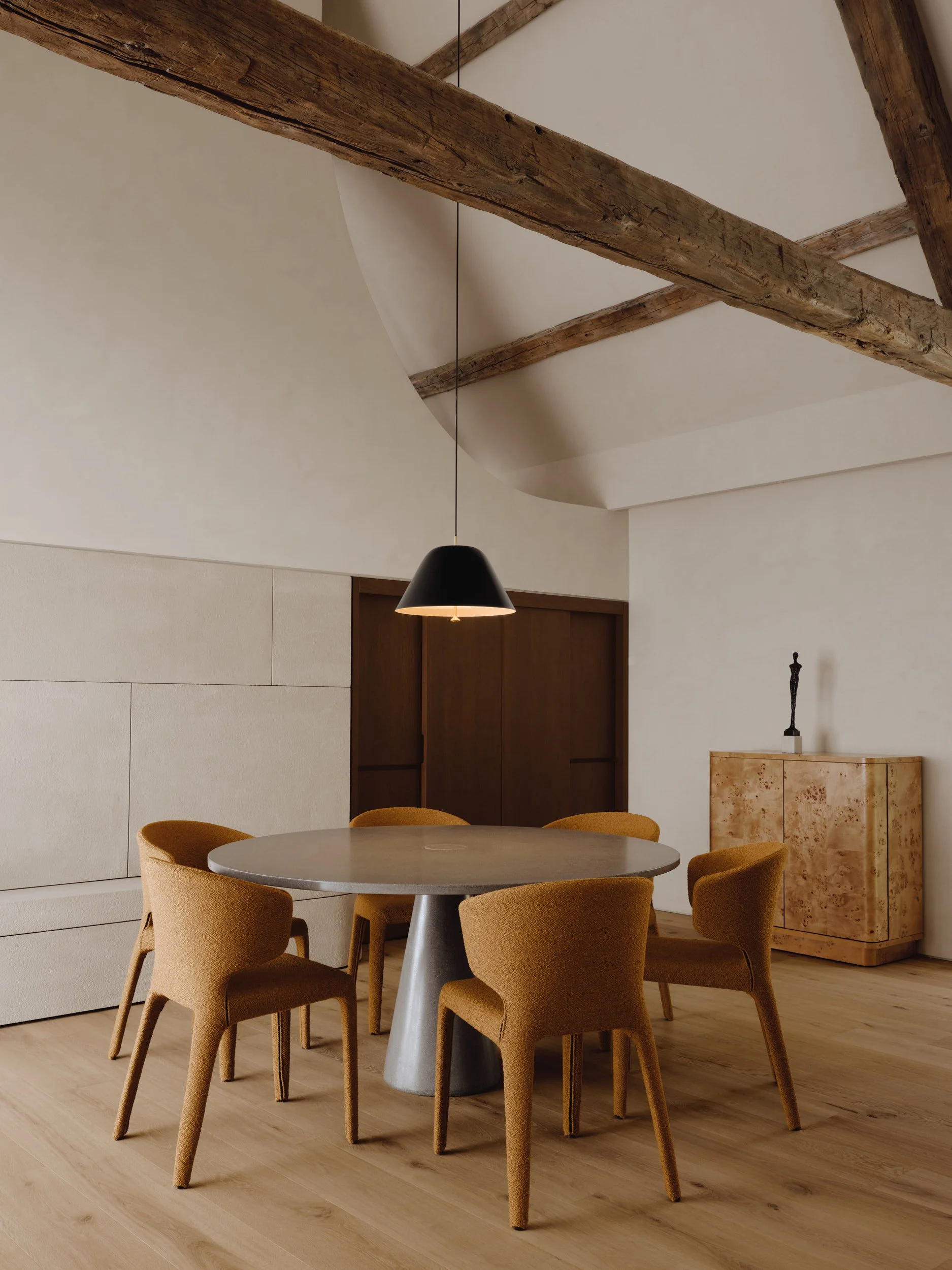
PC: AtelierCarle
3) Sound & Quiet (soften the room; create a retreat)
Why it helps: Hard surfaces bounce sound; softer rooms reduce sensory load.
Do this
Add textiles: rugs, curtains, upholstery.
If street noise: draft stoppers + heavy curtains.
Create a quiet corner with a high-back chair or screen.
Good / Better / Best
Good: Area rug + curtain panels.
Better: Acoustic panels disguised as art.
Best: layered window treatments + targeted acoustic treatment.
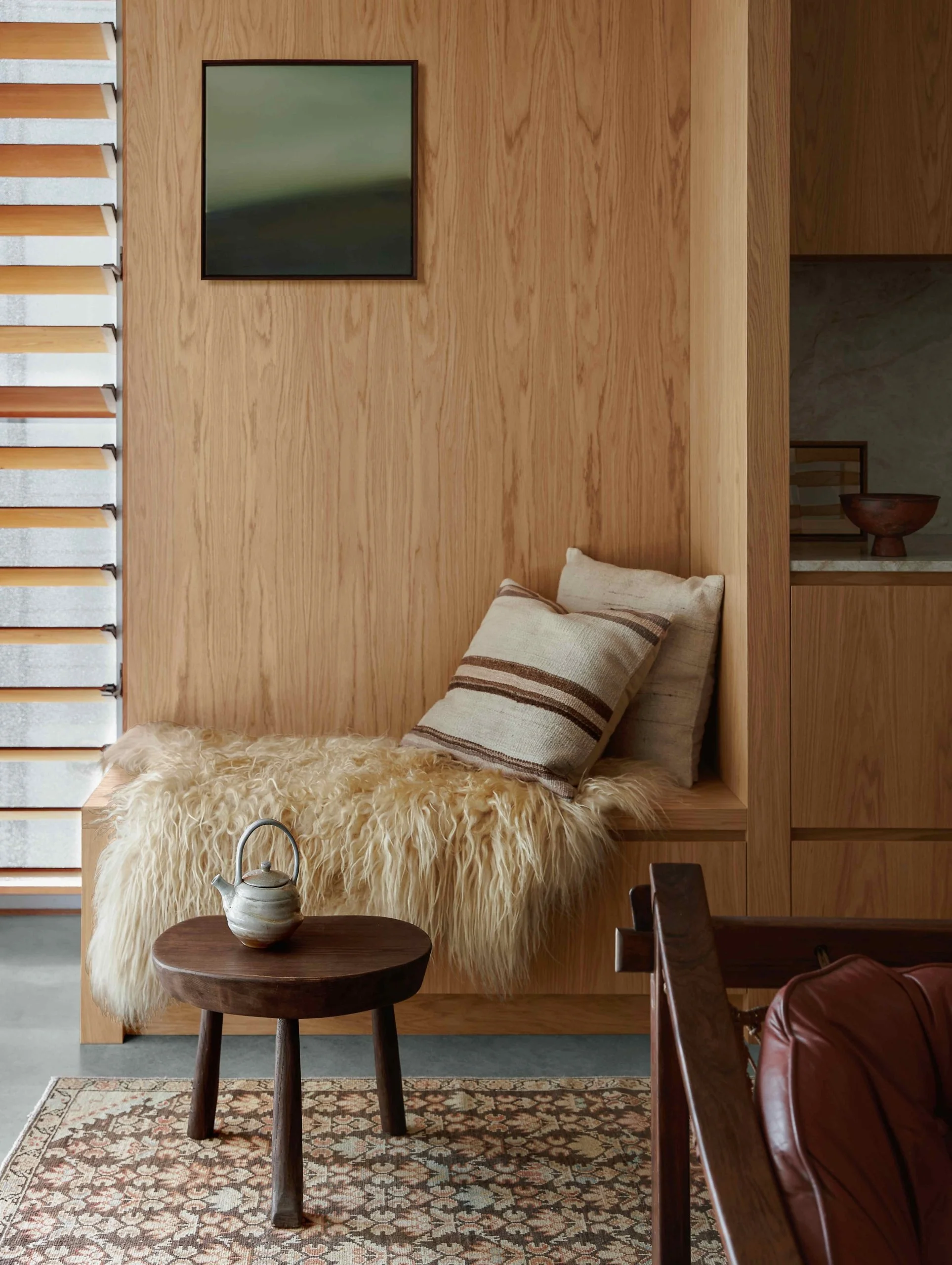
PC: Cadence & Co
4) Temperature & Comfort (stabilize your micro-climate)
Why it helps: Rapid changes in heat/humidity can be provoking.
Do this
Keep airflow gentle (ceiling or desk fans).
Use breathable bedding (cotton/linen).
Stock a cooling kit (gel mask, neck wrap) in your refuge zone.
Good / Better / Best
Good: Linen pillowcases + small fan.
Better: Programmable thermostat + blackout for heat control.
Best: Zoned HVAC or smart thermostats + humidifier/dehumidifier balance.
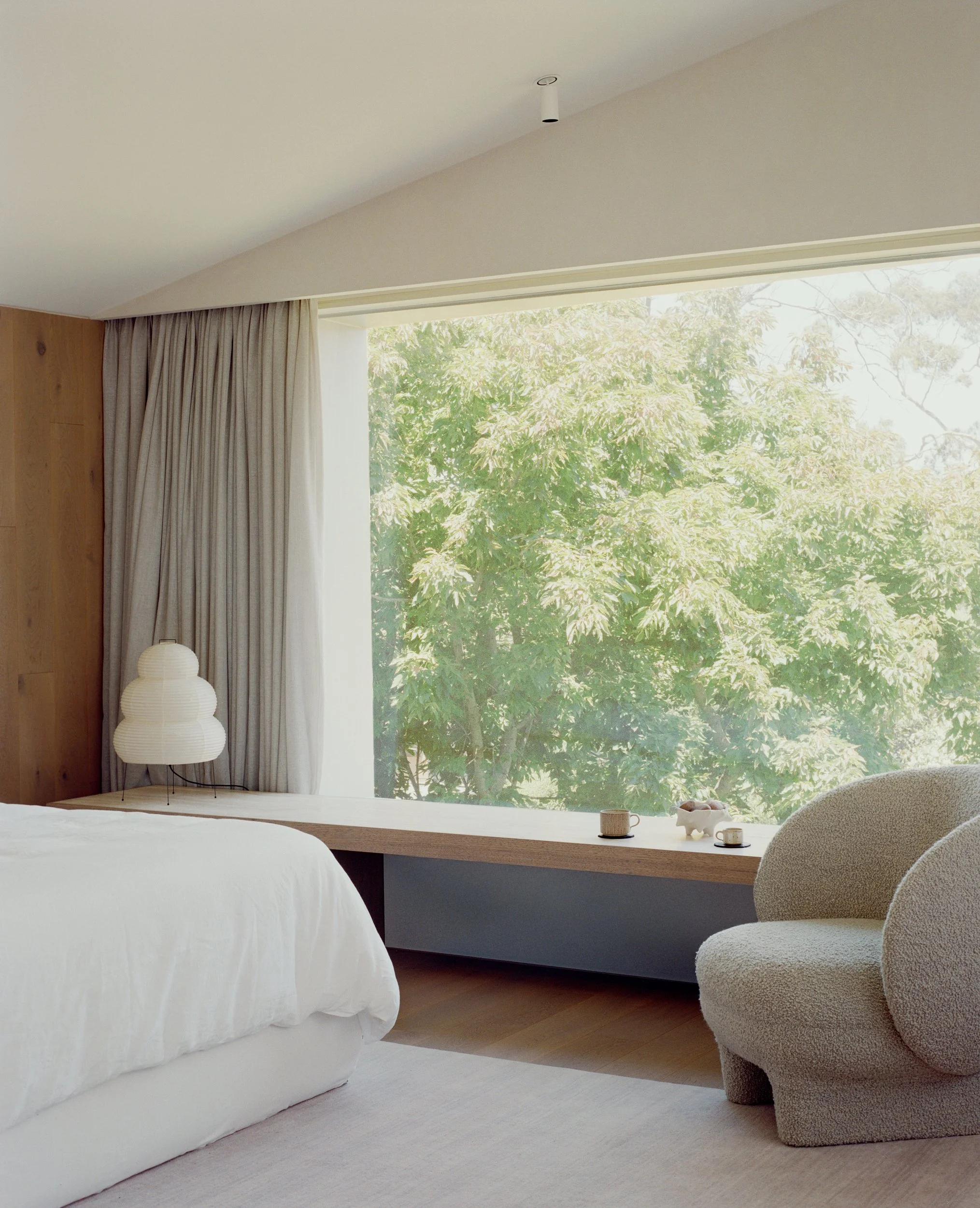
PC: Sonelo Architects
5) Sanctuary Space (your “reset” zone)
Why it helps: A predictable, low-stimulus nook helps you downshift faster.
Do this
Blackout option (curtains or mask).
Comfort seat (soft, supportive) + throw + water within reach.
Optional: gentle soundscape or white noise.
Keep clutter minimal; what’s visible should soothe.
Set it up in minutes
Eye mask, earplugs, cooling pack, phone-free rule, soft light with dimmer.
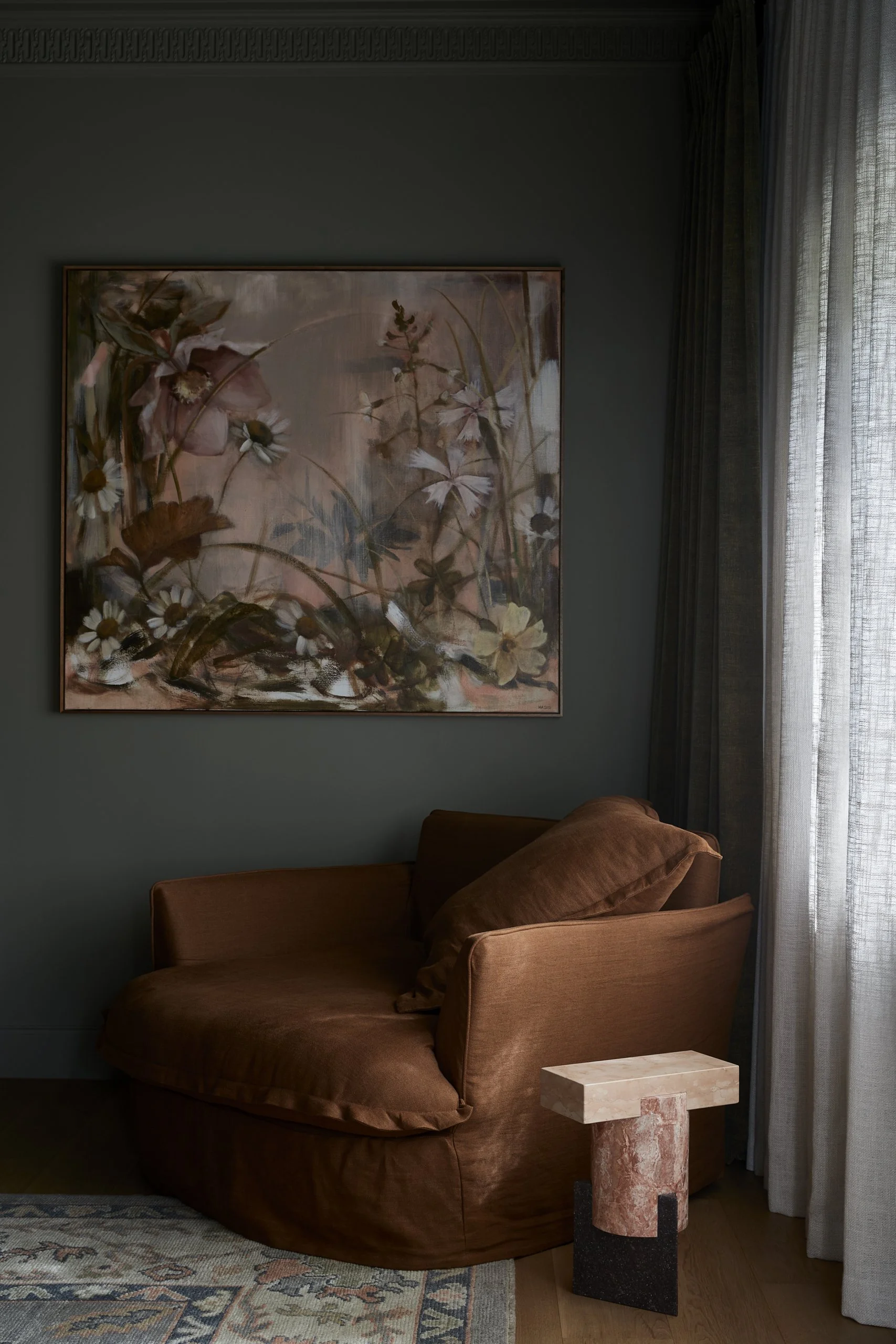
PC: Hecker Guthrie
A Dayhouse Studio Approach (what it looks like in practice)
Light: Diffused daylight + dimmable warm LEDs; optional green-light task lamp for sensitive phases.
Materials & Nature: Natural textiles, matte finishes, and living plants for visual calm.
Atmosphere: Quiet textiles, neutral air, gentle sound masking.
Rest Zone: High-back chair, blackout option, and a tidy tray with essentials.
We don’t diagnose or treat conditions. Our role is design: making spaces that actively support your health goals with science-informed choices and elegant execution.
The tools exist. The knowledge exists. If you live with migraine, we have put both to work for you.
What to try next
Explore Dayhouse Studio Services - See how our design approach can make your home more supportive and restorative.
Read Dayhouse Living: Home as Medicine — Dive deeper into restorative design and wellbeing at home.
Discover More Blogs — Practical tips and personal stories to inspire small, restorative shifts in your space.
Because home isn’t just where you live—it’s where you restore.
-
Use layered, dimmable lighting with warm, high-CRI LEDs and diffused daylight. Some people benefit from narrow-band green-light for task lighting.
-
Neutral air is safest. If you use scent, keep it subtle; choose low-VOC, all natural products.
-
Try window film, clamp lamps with dimmers, rugs, door sweeps, and portable blackout shades.
-
No. Many high-impact changes are low-cost: lamp dimmers, curtains, rugs, and low-VOC products.
Dayhouse provides design guidance and educational content. We don’t diagnose, treat, or replace medical care. Always consult your healthcare professional.
This guide offers design actions that may help reduce environmental triggers at home. Dayhouse provides educational design guidance complementary to medical care—we don’t diagnose, treat, or replace clinical care.
Healthy Dwelling (MDPI 19/4/2248)
Therapeutic Home Environment (MDPI 14/9/1123)
Dayhouse Studio · Salt Lake City, UT