Biophilic Living Room Design
The living room is a dynamic space where a multitude of activities unfold. From lively gatherings with friends and family to moments of quiet introspection, this versatile room plays a large role in our daily lives. As the central hub for relaxation, the living room holds potential to enhance our well-being through biophilic design. It serves as a sanctuary of comfort and connection allowing us to feel the benefits of nature.
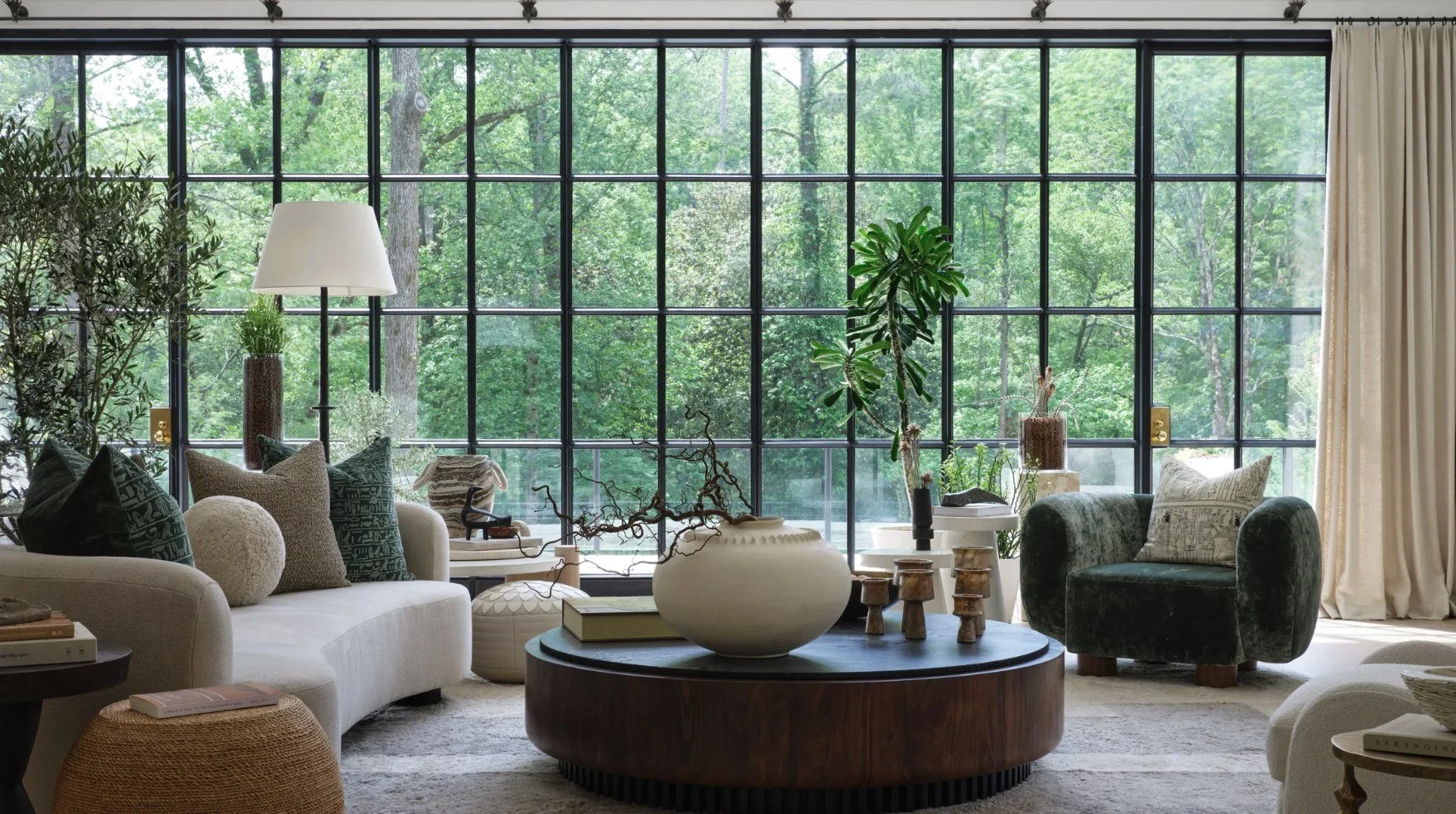
Habachy Designs
Key Biophilic Elements
Natural Light and Views
Ample natural light flooding through large windows creates an uplifting ambiance in the living room. Beyond simply brightening the space, natural light fosters a seamless connection to the outdoors, bringing the beauty of nature indoors. Sunlight not only increases mood but also supports healthy sleep patterns and mental wellness. Views of nature reduce stress and foster connection with the environment. Incorporating these elements creates a healthier and more sustainable living space.
Eco-Friendly Furniture
Eco-friendly furniture in the living room offers a multitude of benefits beyond just aesthetic appeal. Choosing pieces crafted from sustainable materials such as reclaimed wood or recycled metals reduces the environmental footprint and minimizes exposure to harmful volatile organic compounds (VOCs). By choosing eco-friendly furniture, we can create a living room that not only looks beautiful but also promotes well-being, sustainability, and a greater connection to the natural world.
Indoor Plants
Incorporating indoor plants into the living room goes beyond decoration; it fosters a deeper connection with nature and promotes well-being. Plants act as natural air purifiers, removing toxins and pollutants from the air and improving indoor air quality. Studies have shown that the presence of indoor plants can enhance mood and cardiovascular health. Their calming effect promotes relaxation, making the living room a more inviting and rejuvenating space for unwinding after a long day.
Natural Textures and Lighting
Introducing natural textures such as wood, stone, cork, and bamboo add depth and warmth to the living room, creating a sensory-rich environment. These textures not only enhance the visual appeal of the living room but also promote a deeper connection with nature, fostering a greater sense of harmony and well-being. Dynamic lighting, tailored to the time of day, further enhances the ambiance, fostering a balance between energy and relaxation.
Furniture Placement
Strategic furniture placement in the living room is more than just arranging pieces - it's about creating a space that fosters connection, comfort, and flow. Thoughtfully arranging seating encourages easy conversation and social interaction contributing to a sense of closeness and community promoting mental well-being. Additionally, well placed furniture can optimize traffic flow and create designated zones for different activities. This will overall maximize the usability of the space but make it welcoming and inviting for relaxation and entertainment.
Conclusion
In essence, the living room represents more than just a functional space—it's a hub where health-focused design principles can synergistically support holistic well-being for both residents and visitors alike. By embracing biophilic design elements we can create a living room that is a sanctuary for modern living.

MDF Development
If you want to learn more about biophilic living room design, click the link above to view the “Featured Article”, in our magazine!