The $100,000 Fix That Failed—And the Dog Who Found the Hidden Room Destroying My Health
The $100,000 Fix That Failed—And the Dog Who Found the Hidden Room Destroying My Health is a Dayhouse Living Issue 3 article from Dayhouse Studio on the hidden room a dog found after a $100,000 fix failed to restore health. Complementary to medical care, not a substitute. Based in Salt Lake City, we share science-backed ideas for restorative living.

How a mold-sniffing dog uncovered what three inspectors missed and sparked a groundbreaking shift in healing through therapeutic home environments
By Dorothy Huntsman, Founder & Editor-in-Chief
The dog’s tail stopped wagging.
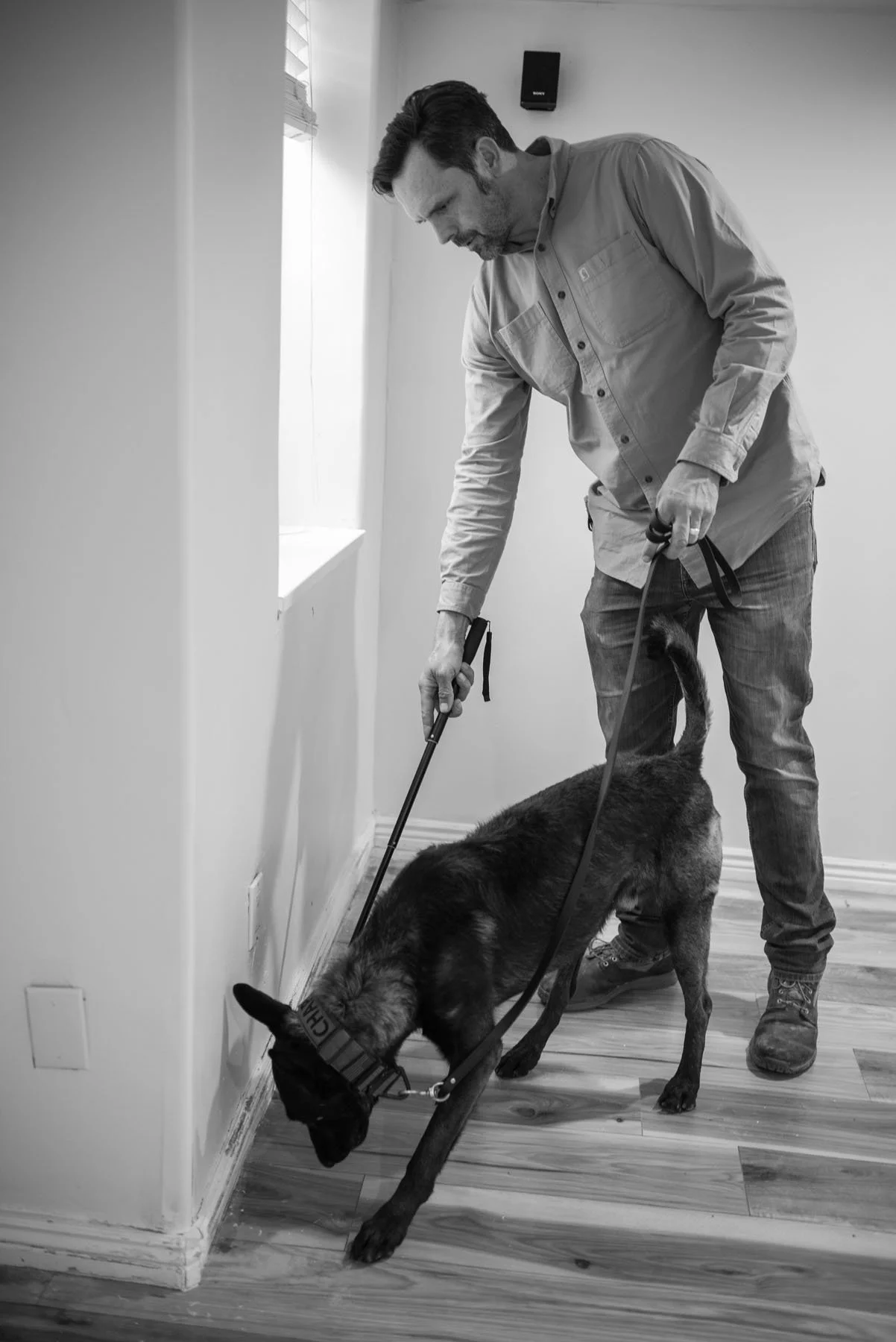
For twenty minutes, Chap, a Belgian Malinois, had worked my house like a seasoned detective methodical, focused, excited. The living room was clear. The dining room, clean. Even the main crawl space, the source of our initial $100,000 remediation, passed his olfactory inspection.
Then he walked into the basement bedroom. Everything changed.
He slowed. Tensed. Circled the perimeter with an intensity that made the air feel charged. I held my breath. Then he sat, firmly, at the center of one perfectly ordinary wall.
"He's indicating a strong positive," his handler said quietly. "There's something here."
I stared at the wall. No water stains. No discoloration. No visible damage. The ceiling above was even open from our previous remediation; we could see straight to the raw joists above.
"Are you sure?" I asked, though I already knew the answer. You don't hire a mold detection dog when things are going well. You hire one when you're desperate. When you've already spent six figures on remediation but you're back to being sicker than ever. When conventional testing says you're fine but your body says you're getting worse.
"Chap doesn't lie," Mike said simply.
To understand why I was willing to trust a dog over three certified inspectors, I need to take you back four years.
The Unraveling - When Perfect Health Becomes a Medical Mystery
Let me back up. Before Chap, before the hidden door, before I knew words like "mycotoxins" and "CIRS", I was the healthiest person I knew. In 2015, I only held catastrophic health insurance, the kind you get when you literally never need a doctor. I was a designer and writer living my dream in a charming century-old Salt Lake City home, on a tree-lined street with ten dear friends as neighbors.
For once, I decided not to renovate just yet. It sounded good to simply live and enjoy this beautiful community while focusing on client work.
That decision nearly cost me everything.
Year one of living there: chronic UTIs that wouldn't respond to treatment. I'd had very few in my adult life, now I had a chronic UTI for eight months.
Year two: Digestive chaos leading to an ulcerative colitis diagnosis. Then migraines, not just headaches, but full-body neurological storms that would steal weeks at a time.
Year three: The pain arrived. Muscles seizing inexplicably, joints aching without cause. I went from hiking twice a day at times to struggling to walk around the block.
Year four: The cognitive symptoms hit. Mid-sentence, words would vanish. I'd stare at my computer, unable to remember what I was supposed to be doing. The woman who juggled 34 remodel projects a year couldn't finish a simple email. Some researchers call it "Type 3 Alzheimer's" or Inhalation Alzheimer’s, brain inflammation triggered by biotoxins. Whatever you call it, I was drowning in it.
Then, one night four years into this health decline, I jolted awake at 3 AM with a single word burning in my mind: MOLD.
The First Battle
The testing confirmed what my body already knew: my beautiful century-old home was poisoning me. My mycotoxin levels were off the charts. The diagnosis: Chronic Inflammatory Response Syndrome (CIRS), a condition affecting roughly 24% of the population who have genetic variations making them susceptible to biotoxin illness.
The first remediation was sweeping:
Tore down 85% of interior walls
Discarded 80% of my possessions (including a vintage Chanel jacket that still hurts to think about)
Lived in temporary housing for 18 months
Spent $100,000 turning my home into a construction/remediation zone
But I had a secret weapon: my partner Greg, a PhD biochemist who works at the intersection of digital health and pharmacy. While I grieved, he researched. Together, we developed a healing protocol based on peer-reviewed science, biophilic design principles to rebalance the nervous system, anti-inflammatory supplements, self-care practices to amp metabolism and detox and environmental modifications to eliminate the cause. We didn't just guess; we built an approach solid enough to be approved by my doctor and published as a peer-reviewed article, “Healthy Dwelling”, in a research journal.
It worked. Within 12 months, I was migraine-free. Energy returned. Pain levels dropped to almost nothing. My ulcerative colitis symptoms improved by 75%. I was rebuilding my design practice, now helping others create healing environments.
We've since explored how that same science is being used to design multisensory environments that improve recovery in both clinical and residential settings.
For 18 months, I lived like a normal person again and we moved back into a newly remediated home.
Then the symptoms crept back.
The Return: When the Nightmare Came Back
The fatigue hit first, that bone-deep exhaustion that makes you feel like you're sludging through a tar field. Then the body pain returned. But the most terrifying part was the cognitive symptoms. The brain fog rolled back in like a familiar monster, stealing words and thoughts and leaving me feeling like I was losing myself all over again.
The anxiety was new this time, a crushing sense of dread that followed me through each day. I started withdrawing from friends, canceling plans, retreating into myself. I recognized the signs, but I couldn't understand why they were happening.
This made no medical sense. We'd remediated everything. Passed every clearance test. The house was certified clean.
But my body knew better.
It’s a story we’ve seen again and again—when test results say everything’s fine, but your environment tells a different truth.
The mycotoxin tests told the story my symptoms were trying to communicate: I was more toxic than I'd ever been.
The Dog Who Knew
Which brings us back to that Tuesday morning, watching Chap paw insistently at my basement wall.
Making the decision to cut into that wall meant gambling another chunk of our already-decimated savings. Professional remediation runs about $100 per square foot when done properly with containment, negative air pressure, HEPA filtration. One cut into a wall with black mold could spread spores throughout the entire house.
But standing there, watching Chap's absolute certainty, I said, "Cut it open".
The first incision revealed what Chap already knew: aggressive black mold colonizing the back of the drywall.
They cut higher. More mold.
Higher still, following the contamination up the wall. When they reached the ceiling level and started pulling out insulation, the specialist stopped.
"There's something back there," he said.
He pulled away more insulation. Behind it, perfectly framed in the wall cavity, was a door.
The Bigger Truth
Standing in my basement, staring into that contaminated room that shouldn't exist, I understood something that changed everything about how I see homes and health and the invisible threats we live with every day.
Our houses can keep secrets. And sometimes, those secrets can harm us.
But here's what gave me hope in that moment of horror: the tools to find the truth exist. A dog named Chap had just proven that. My body's relentless symptoms had been screaming warnings I'd been too scared to fully hear. I’d even had recurring dreams where I’d find hidden rooms in my house.
This literal hidden room was finally found. But the bigger discovery was this: we have more ways of knowing than we think we do. We just have to be brave enough to trust them.
Even when they come with four legs and a wet nose.

Round Two: A Proven Path
The hidden room cost another $40,000 to remediate. The exposure hit hard, every symptom roaring back.
But this time I had what I'd lacked before: a proven healing protocol. The biophilic design modifications, supplements, and environmental changes that had already saved me once were waiting. No guessing. No starting from scratch. Just the crushing disappointment of needing to walk a familiar path again, but at least I knew where it led.
Today, I'm still on that path. We’ve finished the second remediation, and now I'm focused on healing. Recovery isn't linear; it's a daily practice. Some mornings I wake clear-headed and energetic. Other days, the fog rolls in thick.
That truth underlies many of the rituals and sensory supports we’ve featured, from scent to sound to light—each designed to meet you where you are.
But this discovery changed everything. It became the catalyst for the multiple research papers Greg and I are publishing, the digital health platform we're launching, and my mission at Dayhouse Living: to help people understand that their homes can either help them heal or potentially make them sick.
Why Your House Matters More Than You Think
You might be thinking this is an extreme case, a perfect storm of old house, hidden moisture, and genetic sensitivity that could never happen to you.
I hope you're right and thankfully most people are. But the statistics suggest otherwise for a quarter of the population.
According to the EPA, 47% of U.S. homes have mold problems. CIRS affects an estimated 24% of the population, people with genetic variations that make them more susceptible to biotoxin illness. Most don't know they have this sensitivity until something triggers it.
I was one of those people. Healthy my entire life, until I wasn't.
But here's what I've learned: our homes don't have to be sources of illness. They can be sources of healing. The research on biophilic design shows measurable impacts on stress hormones, immune function, cognitive performance, and overall well-being. When we design with the human body in mind, prioritizing air quality, natural light, and non-toxic materials, we create environments that help us heal.
What Your Home Might Be Telling You
If you're dealing with unexplained fatigue, brain fog, recurring headaches, sleep disruption, mood changes, or immune dysfunction that doctors can't pin down, consider how your environment might be contributing.
Start with these questions:
When did your symptoms begin? Did you move to a new home or office around that time?
Do your symptoms improve when you're away from home for extended periods?
Are other family members experiencing similar issues?
Have you noticed musty odors, water damage, or persistent moisture?
Your home has stories to tell. If your body is trying to tell you something, listen. Trust symptoms that persist despite treatment. They're often pointing toward environmental causes:
Hidden moisture and mold (like my case)
VOCs from furniture, paint, or building materials
Carbon monoxide from appliances or attached garages
Radon coming through foundation cracks
Formaldehyde from pressed wood products
Pesticide residues from previous treatments
Chemical fragrances from cleaning products
Water contaminants like lead or industrial chemicals
Microplastics in tap water
Chlorine byproducts
Each of these can trigger symptoms that baffle doctors but make perfect sense once you identify the source.
The Tools That Can Save You
The good news? You don't have to suffer in silence or guess blindly. Professional help exists:
Mold detection dogs: NORMI-certified professionals (like Chap)
Building biologists: Building Biology Institute certified
CIRS practitioners: Surviving Mold physician directory
Air quality testing: Certified Industrial Hygienists
And small changes make big differences:
Better ventilation
Houseplants that filter air
Non-toxic cleaning products
Circadian rhythm enhancing lighting for better sleep
Natural materials that don't off-gas chemicals
These aren't luxuries. They're necessities for anyone who wants their home to be a sanctuary rather than a source of stress.
A Dog Named Chap
Sometimes I think about that Tuesday morning when Chap found what everyone else had missed. How a Belgian Malinois with no medical degree, no expensive equipment, no fancy credentials, just an extraordinary nose and the training to trust it, solved a mystery that had baffled every human expert.
There's a lesson in that. About the wisdom of trusting sources of information we might normally dismiss. About the value of approaches that seem unconventional but get results. About staying curious when conventional methods fail.
I recently learned that Chap has found hidden mold in numerous homes since then. Each discovery is someone's health mystery solved, someone's suffering validated, someone's healing journey begun. He's become something of a legend in our local CIRS community, the dog who sees what humans can't.
But here's what stays with me most: In that moment when Chap sat at my wall, he wasn't doing anything extraordinary by his standards. He was just following his nose. Trusting what he knew. Not second-guessing or overthinking or waiting for permission.
Just knowing. And acting on that knowledge.

The Revolution Starts With You
The most important lesson from my $140,000 journey isn't about mold or remediation or even recovery. It's this: we are all living with hidden rooms.
Maybe yours isn't a literal crawl space behind a wall. Maybe it's the new carpet that coincided with your child's asthma. The memory foam mattress you bought before the migraines started. The renovation that triggered symptoms no doctor can explain.
We live in a world that tells us to trust the experts, the tests, the certifications. But here's what Chap taught me: sometimes the most sophisticated detection system isn't a machine or a credential. Sometimes it's a dog who simply knows. Sometimes it's dreams that won't leave you alone. Sometimes it's that persistent voice saying something is wrong here, even when everyone insists you're fine.
My hidden room destroyed my health. But finding it revealed a truth that changes everything: our bodies are brilliant. They're constantly gathering data our conscious minds can't process. They're trying to save us, if only we'd listen.
You don't need to spend $140,000 to learn this lesson. You don't need to get as sick as I did. You just need to trust that nagging feeling. Honor that recurring symptom. Follow that instinct that says your home, your sanctuary, might be the very thing that's hurting you.
The revolution doesn't start with gutting your house or hiring a detection dog. It starts the moment you decide your body's wisdom matters more than any certificate on a wall.
It starts when you choose to believe yourself.
Like Chap sitting firmly at that wall, certain of what he knew, refusing to move until someone listened.
My house was making me sick. It took a dog to prove it. Now I help others heal through their homes because I learned the hard way that where we live determines how we live.

Awareness is where healing begins. If migraine is part of your health picture, the next step is understanding what your home may be contributing, and what it could offer instead.
SOURCES / Further reading
Healthy Dwelling (MDPI 19/4/2248)
Therapeutic Home Environment (MDPI 14/9/1123)
Dayhouse Studio · Salt Lake City, UT
💬 Join Our Community
Have you ever felt like your body was trying to tell you something about your space? You’re not alone. Share your story, your instincts, or what your home helped you uncover—and let’s build a community of healing through design and awareness. We feature reader experiences in our magazine and on Instagram.

Related Articles

Does Your Home Support Your Mental Well-being?

Pet’s Role in Alleviating Mental Health Issues

Letter from the Editor Issue 3