


3 Expert Tips on Managing Stress and Enhancing Mental Well-being Through Home Design
In today’s fast-paced world, managing chronic stress and anxiety has become an essential part of maintaining overall well-being. With our homes serving as sanctuaries from external pressures, how we design and organize these spaces can have a profound impact on our mental health. To explore this intersection of home design, mental health, and well-being, we asked three professionals—each an expert in their field—three key questions. Their insights provide valuable strategies for creating healing environments that support mental well-being, as well as personal reflections on what motivates them in their work.
Meet our experts:
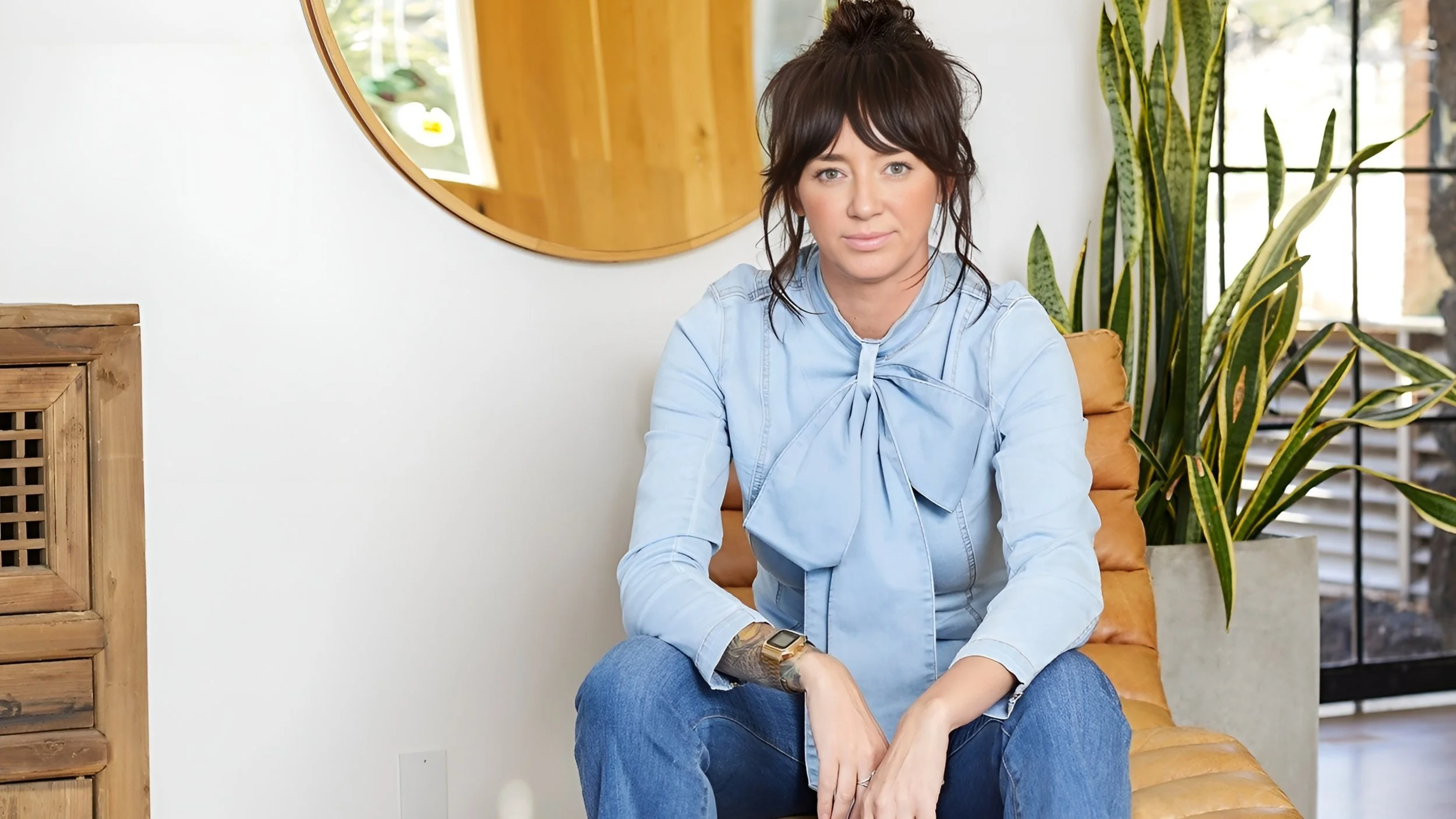
Amber Dunford, a Design Psychologist and Style Director, who brings a unique perspective on how our environments influence our emotions.

Meghann Kopecky, CEO of ShiftAside and SafeLane Health, who combines her passion for mental health with technology to create accessible tools for well-being.

Mateusz Skwarczek / Agencja Wyborcza.pl
Natalia Olszewska, a medical doctor and a specialist in the Neuroscience of Architecture and Co-Founder of Venetian Letters and IMPRONTA, who merges science with design to create spaces that promote health and well-being.
Each of these experts provides thoughtful insights into managing stress, designing for mental well-being, and the motivations that drive their work.
Here are their answers:
What are some effective strategies for managing stress and anxiety at home?
Amber: Managing clutter is the first thing that comes to mind in terms of managing stress levels and anxiety within the home. We tend to spend excessive amounts of time scanning cluttered environments, which can be a big energy drain and makes it difficult to concentrate or relax.
Shared use spaces like kitchens, living rooms, and bathrooms are areas that tend to accumulate clutter, so creating organizational systems for these spaces is helpful. This can be storage pieces like credenzas or cabinets, utilizing containers for frequently used items, and containing to the amount of clutter at eye level or on countertops. We can process curated clutter in a much easier manner than unruly piles or overflowing bins.
You may also want to limit the amount of prints and colors used in combination within a single space. Too many contrasting colors and similar scaled prints can make a space feel visually cluttered. Using colors in varying saturation levels or mixing the scale of prints can help alleviate the visual chaos of a space. Leaning into a monochromatic color scheme is typically soothing for humans. If the goal of a space is to decrease anxiety and promote feelings of calm, working within a single color and the range of hues and saturation levels it offers is a great place to start.
Meghann: One of the best management tools for keeping stress or anxiety to a minimum is routine. We typically eat dinner around the same time every night, we have fairly consistent bedtimes, and we prep the night before for the next day (e.g., make lunch for school or get sports stuff ready for the next day’s game). This way, we are usually not scrambling to get out the door or racing to get to the day’s events. Being that we are a family of five, with elementary- and high-school-age kids at home, this is pretty important. For me personally, I manage my stress by exercising most weekdays and, as simple as this sounds, eat when I am hungry. I know my mood can take a downturn if I haven’t properly nourished my body during the day.
“ On the design side, creating a decluttered, organized space is crucial. Daniel Levitin, a neuroscientist and author, in his book “The Organized Mind,” emphasizes the importance of an organized home environment and suggests decluttering to remove unnecessary items, categorizing similar items together for efficiency, and designing dedicated spaces for different activities. From a cognitive science perspective, an organized environment reduces cognitive load, minimizes distractions, and enhances focus and productivity, ultimately supporting mental clarity and reducing stress.”

Photographer: Mateusz Skwarczek /
Agencja Wyborcza.pl
How can creating a specific environment at home enhance mental well-being and which area of your home do you find most essential for relaxation and rejuvenation?
Amber: When we have an area designated to enhance our well-being, it’s much easier for our mind to follow suit once we enter this space. This can be a room for yoga, artwork, a reading nook or a calming primary bedroom, whatever your version of self-care looks like. If we are required to set up a space for a specific use each time we want to use it, we fall into what is known as a gumption trap, making it more likely that we will avoid using the space or performing the desired task.
For example, imagine you wanted to create a craft room in your home because it aids in focus and helps calm your anxiety. If you had to set up this space for crafting each time you wanted to use it, the likelihood you would commit to using it is much lower than if you were able to have all your supplies at hand and leave in-progress crafts out. This is an important aspect of creating a space that facilities well-being and ensures we will stick to the commitments we make to ourselves.
I personally gravitate towards the warmest and sunniest rooms in my home for relaxation, which is typically the living room where there are large windows that face the mountainside. Views to nature are incredibly healing and calming, so the natural sunlight paired with view to the outdoors is a great recipe for rejuvenation.
Natalia: Creating a specific environment at home can significantly enhance mental well-being by incorporating design elements that optimize light exposure. Access to natural light during the day and minimizing blue light exposure at night supports neuroendocrine health, improving sleep quality and hormonal balance. The bedroom is essential for relaxation and rejuvenation, and its design should include blackout curtains, appropriate lighting, and calming scents to enhance sleep quality. Quality sleep is crucial for cognitive function, memory consolidation, and emotional processing, ultimately preventing cognitive decline and mood disorders.
Meghann: “Studies have actually shown that when individuals use words like “cluttered, messy, dirty” to describe their living spaces, it is detrimental to their well-being versus when individuals use words like “clean, tidy, organized.” Creating a clean, clutter-free space is helpful for my mental well-being. When my house is clean and tidy I actually feel myself inhale and smile. It makes me happy to see a beautiful, clean room.
“The areas of my home that are most essential for relaxation are either my outside space during the warmer months or in my living room. When in my living room, I can see outside and enjoy the sunlight shining in.”
- Meghann Koepecky

What motivates you to work in the field that supports mental health, and how does it impact your own well-being?
“While I consider myself to be fairly logical and rational, I am also someone who can easily tap into how I feel and am often guided by my connections to people, objects, and spaces. I love teaching about design psychology as a way to help others recognize those connections for themselves and really value the knowledge I have gained through finding the link between psychology and design.
Having this understanding helps in trusting my instincts when it comes to design, especially in terms of designing for myself. I know what my preferences are and the spaces that I feel best in, which is a great tool when making decisions for my home that align with my mental health needs. ”

Meghann: During COVID, when I experienced depression, it felt awful, confusing, and seemed really hard to navigate. I also had the reality of taking care of three kids, so going through the motions, but not experiencing joy (and feeling terrible) was really difficult. I became obsessed with two questions: “How can I feel better?” and “How can I ensure I don’t feel this way ever again?”
An analysis of over 100 years of research revealed that individuals are able to get better and stay healthy and happy long-term without expensive drugs or therapy. With this incredible discovery, a team and I were determined to create something that others could use on their own schedule, regardless of financial status or address. ShiftAside, a self-guided app, is doing what we set out to do. People’s lives are changing because of the tools they have learned and practiced with our plan. What’s amazing is they empowered themselves—they believed in themselves and that not only motivates me but also gives me such purpose.
Natalia: The desire to merge neuroscience with architectural design to create spaces that enhance mental health motivates me. Architectural design of spaces where we live, study, and work is part of public health strategies to improve the health of the general population. Thanks to neuroscience, we can optimize human health and performance in all these spaces. This work enriches my own well-being by fostering continuous personal growth, empathy, and resilience.
The insights shared by Amber Dunford, Meghann Kopecky, and Natalia Olszewska highlight the important role that our living environments play in mental health. From reducing clutter to optimizing light exposure, these strategies are not just about aesthetics—they’re about creating feel-good spaces that actively support our emotional health and psychological well-being. As we consider how to make our homes more than just places to live, but living support systems for mental health, the advice from these professionals serves as a valuable guide. Their dedication to improving mental well-being through design and technology not only impacts their clients but also enriches their own lives, offering inspiration for us all to create environments that nurture our minds and spirits.
Expert Profiles:
Amber Dunford, Design Psychologist, Style Director
Amber Dunford is a former mental health clinician turned interior designer and one of only a handful of “design psychologists” with expertise in the connection between space design and mental health. She spent years in private practice as a therapist before merging her passions for design and psychology by developing a college course on the relationship between the two. She believes there is a powerful, and often underrated, correlation between our mental wellbeing, and the spaces we inhabit.
Today, Amber is the style director for an online furniture and home furnishings retailer. She also offers interior design services and design psychology sessions to anyone looking for ways to enhance their emotional wellbeing through design.

Meghann Kopecky, CEO of ShiftAside, Mental Health App
Meghann Kopecky serves as the CEO & Founder of SafeLane Health, an organization dedicated to bringing the highest quality research in medicine to the masses, through smart technology. Since 2015, Meghann has successfully guided SafeLane Health in their mission to assist governments, businesses and nonprofits to keep people safe and healthy (physically and mentally). ShiftAside (https://shiftaside.com), a self-guided app to help combat depression, is SafeLane's newest product. She is also the host of Science Saturdays, a podcast where she interviews experts from all over the world about how to live healthier and happier. She is a US Patent Holder.
Natalia Olszewska, Medicine and Neuroscience of Architecture, Co-Founder of Venetian Letters and IMPRONTA
Natalia Olszewska is a specialist in the application of medical and neuroscientific knowledge in architectural design. She is the co-founder of the research and consulting firm IMPRONTA, which focuses on design for health and well-being. She holds a unique educational background in medicine (Jagiellonian University and Tor Vergata), neuroscience (University College London, École Normale Supérieure, Sorbonne), and neuroscience applied to architectural design (Università IUAV). She has completed research internships at Harvard University and the Collège de France. She has gained experience working on projects for global companies such as Arup, Skanska, and Google. Natalia is also a lecturer in the NAAD (Neuroscience Applied to Architectural Design) Master's program organized by Università IUAV.

Related Articles

Healthy Dwellings: How Biophilic Design Supports Mental Health

The Healing Power of Urban Trees on Human Health

Does Your Home Support Your Mental Well-being?