


Biophilic School Environments: Nurturing Mental Health and Academic Success
In the everyday hustle of growing up, our children spend countless hours in school—roughly six hours a day or 1,000 hours a year. These hours are not just about absorbing facts and figures; they are crucial moments when young minds expand, memories form, and critical thinking skills take root. Through the magic of neuroplasticity, their brains are busy weaving billions of new connections.
But here’s a question worth pondering: could the very spaces where our children learn be designed to do more than just educate? Could they also nurture mental well-being while raising academic performance? Imagine classrooms infused with elements of nature—spaces that don’t just teach but heal. Research is beginning to suggest that the answer is a resounding yes. So, let’s dive into the world of biophilic design and explore how bringing nature into our schools could be a game changer for our children’s mental health and academic success.

Mahlum Architects Photography: Benjamin Benschneider
Acknowledging the Mental Health Crisis Among Youth
We can’t talk about mental health in schools without recognizing the growing crisis among our youth. In the United States alone, millions of children are grappling with mental health challenges ranging from anxiety and depression to ADHD and substance use disorders. To put it into perspective, by 2020, over 5.6 million children were diagnosed with anxiety, and 2.4 million with depression [1]. These numbers paint a stark picture of the pressures our children face every day. With more than 60% of kids experiencing at least one traumatic event by age 16 and school-related stressors like bullying adding to the mix, it’s clear that we need to rethink the environments where they spend so much of their time.

Mahlum Architects Photography: Benjamin Benschneider
A Personal Story from a College Student’s Perspective
“My first year at college was a rollercoaster of emotions. From the exciting yet overwhelming period of meeting countless new people every day, to the fear of living in a completely new city—it was a lot to handle. Watching my parents walk away, leaving me in an unfamiliar place felt bizzare, it was an indescribable feeling. I had always wanted to leave Salt Lake City, but I hadn’t anticipated how uncomfortable it would feel once I was here. Being naturally anxious, I found a thousand things to stress over during that first semester—will I make any friends? Will I be able to keep up with the rigorous academics? And worst of all, how would I cope with being thousands of miles away from my dog for a whole year?
I struggled to find people I connected with, and I struggled to adapt to the intense curriculum at Columbia. The stress was overwhelming, and I wasn’t alone. In my first semester, two students at my school committed suicide by jumping from a 15-story window. They were tragedies that shook the entire campus. The Mayo Clinic reported that in 2022, 44% of students experienced symptoms of depression, and 15% seriously considered suicide in the past year. Whether it’s the pressure to meet high expectations, academic overload, or even the harshness of New York winters, college students across the country are battling depression or anxiety to varying degrees.
Therapy and mental health support are vital, but there are also smaller, everyday things that have helped me personally. Something as simple as connecting with nature made a big difference in my life. There’s something incredibly calming about nature—it has this innate ability to heal. Studies have shown that spending time in natural environments reduces stress, improves mood, and even enhances cognitive function. For me, bringing nature into my space, whether it was a potted plant or just making sure I took time to experience Central Park, provided a much-needed sense of peace.
College is one of the most challenging times in many people’s lives. If something like biophilic design—surrounding yourself with natural elements—could make that time even a little less stressful, why wouldn’t we embrace it? Nature is healing, and it’s something I’ve personally found helpful. As a student navigating the pressures of college life, I would strongly recommend exploring biophilia. Anything that lightens the emotional load and brings calm into your life during such a chaotic time is worth considering.”
- Jack
Biophilic Solutions to Improve Mental Health in Schools
Nature is not just a backdrop; it’s a powerful ally in the fight for better mental health. Research shows that biophilic interior design—integrating natural elements into our built environments—can reduce both perceived and physiological stress, boost mood, and sharpen attention [2]. For our schools, this means that thoughtfully incorporating biophilic elements into classrooms could not only support mental health but also enhance academic performance.
A timely resource in this arena is the "Toolkit of Biophilic Interventions for Existing Schools to Enhance Student and Faculty Health and Performance" from Carnegie Mellon University [3]. This toolkit offers a practical guide to retrofitting K-12 schools with biophilic elements, making classrooms more beautiful and impactful. Strategies such as maximizing sunlight, integrating nature-inspired educational content, and incorporating fragrant flowers and herbs into school spaces create environments where students can thrive—mentally, emotionally, and academically. Natural light in classrooms has been shown to improve mood, sleep, and social interactions while also preventing childhood myopia (nearsightedness) [4].The home’s layout, which mimics a garden path leading from one discovery to the next, encourages movement and engagement—both physically and mentally. This dynamic design helps combat the lethargy often associated with depression by fostering a sense of curiosity and connection with the environment.
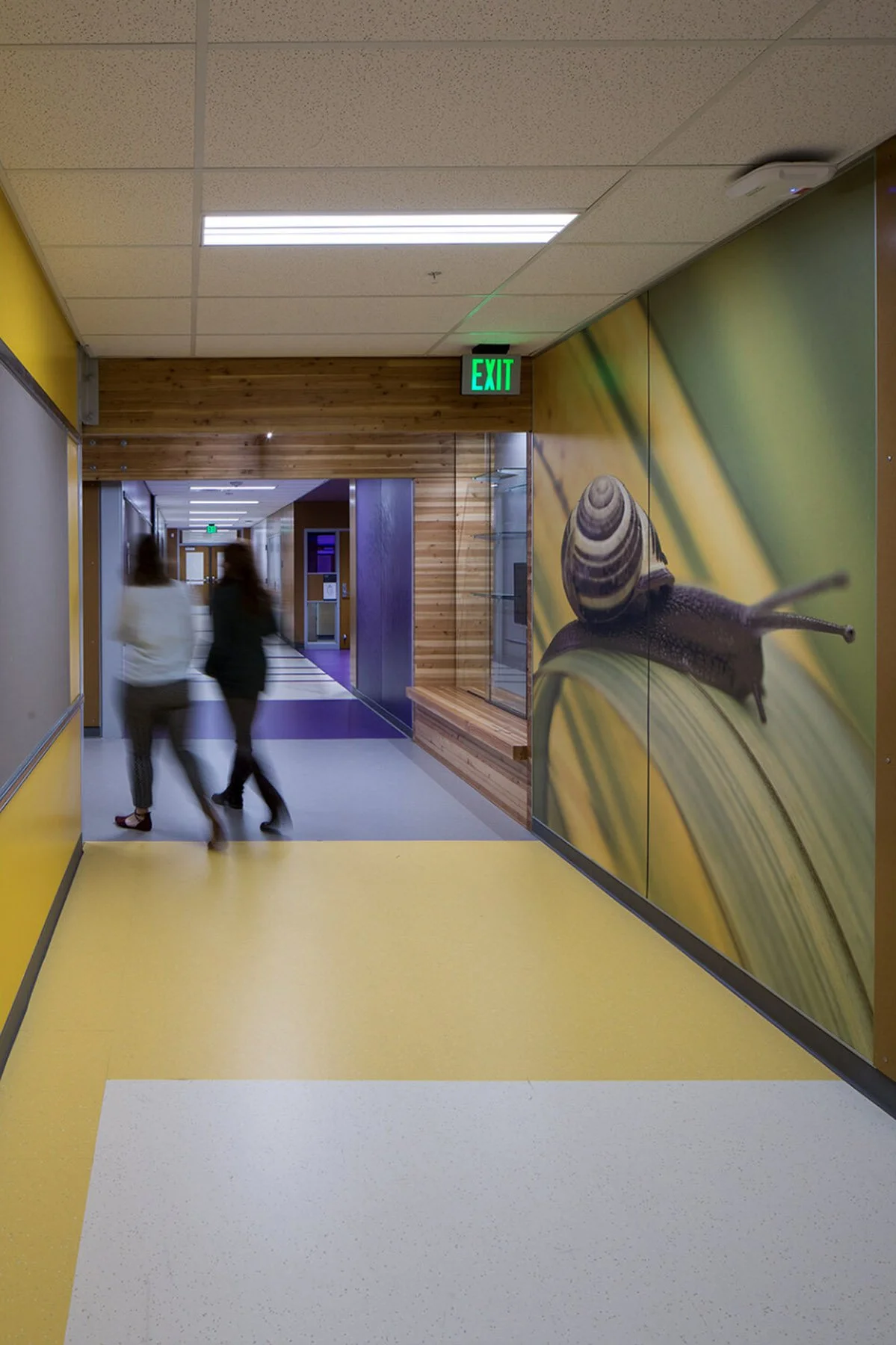
Bassetti Architects

Biophilic Classrooms and ADHD
One of the most compelling areas of research in biophilic design is its impact on attention, particularly for students with ADHD. A study that transformed a conventional classroom into a multi-sensory biophilic environment observed improvements in the attention and cognitive performance of students aged 6-11 [5]. Another study found that biophilic elements, such as plants, increased visual attention in preschool children when they were sitting at a desk [6]. These findings align with the Attention Restoration Theory, which suggests that natural environments have a unique ability to restore our attentional capacities.
Also important, children with ADHD can benefit from the calming, attention-boosting effects of outdoor greenery. Research from the University of Illinois Urbana-Champaign found that children with ADHD who engaged in green outdoor activities had better attention performance and less severe symptoms than those who spent time indoors [7]. These insights remind us that nature is not just a luxury; it’s an essential component of a healthy learning environment.
Check out our blog featuring the best kid's furniture idea for managing anxiety and ADHD!
Bassetti Architects
How to Bring Biophilic Design Into Classrooms
Bringing nature into the classroom doesn’t have to be complicated or expensive. Schools can explore various biophilic elements tailored to different age groups. For older elementary students, indoor plants can improve attention and air quality, while younger children might benefit from simply looking at images of nature. Research has shown that potted plants in elementary classrooms can enhance attention and improve air quality [8], and artificial green walls can boost working memory [9]. Even the simple succulent Vick’s plant, with its menthol-like scent, can help reduce stress and cortisol levels in just 60 minutes of exposure [10].
Biophilic design also engages our sense of sound. Natural soundscapes, like birdsong or water sounds, have been shown to improve attention and short-term memory [11]. Incorporating these sounds into classroom breaks could provide a simple, effective way to help students recharge.
As children grow, the benefits of biophilic design extend into higher education as found in the article, “Biophilic Design for Restorative University Learning Environments: A Critical Review of Literature and Design Recommendations” [12]. University campuses that integrate green spaces, walking paths, and natural materials encourage students to spend more time outdoors, create microclimates that improve comfort, and reduce noise pollution. These biophilic elements promote relaxation, positive moods, and improved cognitive function. For the university classroom, the authors recommend windows that provide daylight and enhanced ventilation, lighting variability, nature-inspired patterns, colors and natural materials.

Mahlum Architects Photography: Benjamin Benschneider
Biophilic School Design for a Sustainable Future
Biophilic school environments are more than just a trend—they’re a vital investment in our children’s future. By integrating natural elements into classrooms, we can create spaces that improve mental health, enhance academic performance, and provide long-term benefits for both students and teachers [13,14]. The return on investment in biophilic schools is unparalleled, offering a path to healthier, happier, and more productive learning environments. Let’s continue to spread awareness about the transformative power of biophilic design in education, and, in doing so, nurture the minds and spirits of the next generation.

Bassetti Architects
REFERENCES
[1] Lebrun-Harris at al (2022) Five-Year Trends in US Children’s Health and Well-being, 2016-2020. JAMA Pediatr. 2022;176(7):e220056. doi:10.1001/jamapediatrics.2022.0056
[2] Hung et al (2021) Health benefits of evidence-based biophilic-designed environments: A review." Journal of People, Plants, and Environment 24.1; Zhong et al (2022) Biophilic design in architecture and its contributions to health, well-being, and sustainability: A critical review. Frontiers of Architectural Research 11.1.
[3] Leif and Loftness (2024) Toolkit of Biophilic Interventions for Existing Schools to Enhance Student and Faculty Health and Performance. Architecture 4, 445-456. doi.org /10.3390/architecture4020024.
[4] Dumont and Beaulieu (2007) Light exposure in the natural environment: relevance to mood and sleep disorders. Sleep Medicine 8; Aan het Rot et al (2008) Exposure to bright light is associated with positive social interaction and good mood over short time periods: A naturalistic study in mildly seasonal people. Journal of psychiatric research 42.4; Young-Woo et al (2022) Effect of classroom illuminance on the development and progression of myopia in school children. Korean Journal of Ophthalmology: 36.3:194.
[5] Barbiero et al. (2021) Bracing Biophilia: When biophilic design promotes pupil’s attentional performance, perceived restorativeness and affiliation with Nature. Environ Dev Sustain, doi.org/10.1007/s10668-021-01903-1
[6] Fadda et al (2023) Elements of Biophilic Design Increase Visual Attention in Preschoolers. Buildings 13, 1160. doi.org/10.3390/buildings13051160
[7] Taylor et al (2001). Coping with add: The Surprising Connection to Green Play Settings. Environment and Behavior, 33(1), 54-77. doi.org /10.1177/00139160121972864
[8] Kim at al (2020). Higher Attention Capacity After Improving Indoor Air Quality by Indoor Plant Placement in Elementary School Classrooms. The Horticulture Journal, 89(3), 319–327. doi.org /10.2503/hortj.utd-110
[9] Bernardo et al (2021) The Restorative Effect of the Presence of Greenery on the Classroom in Children’s Cognitive Performance. Sustainability 13, 3488. doi.org /10.3390/su13063488
[10] Li et al (2024) Beneficial effects of short-term exposure to indoor biophilic environments on psychophysiological health: Evidence from electrophysiological activity and salivary metabolomics, Environmental Research, Volume 243, 117843, doi.org/10.1016/j.envres.2023.117843.
[11] Shu and Ma (2019) Restorative Effects of Classroom Soundscapes on Children’s Cognitive Performance. Int. J. Environ. Res. Public Health 16, 293. doi.org /10.3390/ijerph16020293
[12] Peters and D'Penna (2020) Biophilic Design for Restorative University Learning Environments: A Critical Review of Literature and Design Recommendations. Sustainability 12, 7064. doi.org/10.3390/su12177064
[13] Browning and Determan (2024) Outcomes of Biophilic Design for Schools. Architecture 4, 479-492. doi.org/10.3390/architecture4030026
[14] Gray and Downie (2024) Designing Thriving School Ecosystems: The Synergy of Biophilic Design, Wellbeing Science, and Systems Science. Architecture, 4, 594-612. doi.org/10.3390/architecture4030031
If you’re interested in seeing the same principles come to life in one of our recent projects that transformed a classroom into a biophilic haven designed to reduce stress and increase attention and learning capability, check out our blog!
-
![]()
Architect: Mahlum Photography: Benjamin Benschneider
-
![]()
Bassetti Architects
-
![]()
Bassetti Architects
-
![]()
Bassetti Architects
-
![]()
Architect: Mahlum Photography: Benjamin Benschneider
-
![]()
Bassetti Architects
-
![]()
Bassetti Architects
-
![]()
Bassetti Architects
-
![]()
Bassetti Architects


Related Articles

The Trend with Staying Power

The Best Kid’s Furniture for Managing Anxiety and ADHD

Lime Paint’s Environmental Renaissance