Your Bedroom Is Medicine: Designing a Space That Actually Heals
Bottom Line: Your bedroom might be costing you more than rent—it could be stealing your sleep, your health, and years of your life. But here's the good news: simple, intentional design changes can transform your space into medicine.
I tried everything. Twelve different medications. Nerve blocks. Botox injections. Meditation apps. Diet overhauls. For 550 consecutive days, chronic migraine ruled my life. Nothing worked—not the prescriptions, not the specialists, not the desperate 3 a.m. internet searches.
What finally broke the cycle wasn't a pill. It was my bedroom.
You know that feeling when you finally exhale after holding your breath too long? That's what happened when I redesigned my sleep space. The migraines didn't vanish overnight, but for the first time in nearly two years, my body remembered what real rest felt like. And slowly, steadily, the migraine days began to decrease.
Here's what most people don't realize: Americans lose $411 billion annually to insufficient sleep—that's 2.28% of our entire GDP. More than 1.2 million working days vanish each year because we're simply too exhausted to function. We're spending a fortune trying to fix our sleep problems with pills and devices, while the real solution is literally surrounding us every night.
More than one in three Americans gets fewer than seven hours of sleep per night. But the crisis isn't just about duration—it's about quality. Nearly 15% of adults have trouble falling asleep most nights, and almost 18% struggle to stay asleep.
Your bedroom holds the answer.
The Healing Power of Intentional Design
Sleep isn't just downtime—it's the most powerful form of medicine your body produces. When we combine good sleep hygiene with environments designed to support circadian rhythms, calm the nervous system, and invite sensory balance, something remarkable happens: the benefits don't just add up, they multiply.
Through my own healing journey, I discovered that sleep hygiene and bedroom design for better sleep were more effective than any prescription migraine medication available to me. Your home can become an active partner in your healing when you design it with intention.
Here's how to transform your bedroom into a sleep sanctuary.
Light: The Master Control for Your Sleep Cycle
Picture the moment just before sunset—that golden, softening light that makes everything glow. Your body knows this light. It's been programmed over millions of years to respond to it. Light exposure is the most powerful external factor in regulating your circadian rhythm, the 24-hour internal clock that tells your body when to feel alert and when to rest.
But here's what's happening in most bedrooms: research tracking thousands of women found that sleeping with a TV or lights on is associated with significantly poorer sleep across multiple dimensions—shorter sleep duration, inconsistent sleep/wake times, and overall degraded sleep quality.
Even small amounts of nighttime light create problems. A recent study on bedroom light exposure found something striking: higher levels of light at night were associated with an 81-minute delay in the body's natural sleep signal. Just 45 minutes of light exposure above 5 lux at night—that's roughly the brightness of a nightlight—significantly disrupted circadian rhythms.
Your nervous system bedroom lighting strategy:
Layer your light sources: Pair overhead lights with table or floor lamps equipped with dimmers. Think of lighting like a musical composition—you want the ability to create different moods throughout your evening wind-down.
Block outside light pollution: Blackout curtains or cellular shades aren't just for aesthetics—they're essential for natural migraine relief and circadian rhythm lighting. The darker your room, the more melatonin your brain produces.
Morning matters too: Don't let your blinds "live down" all day. Research on light exposure behaviors shows that natural daylight exposure, especially in the morning, helps synchronize your body clock and promotes earlier, healthier sleep timing. Open them fully when you wake. Morning light is one of your strongest circadian cues, setting the stage for better sleep 16 hours later.
Consider automation: Smart shades that rise gradually with your wake-up time gently cue your body clock without the jarring alarm. Your body responds to light even through closed eyelids.
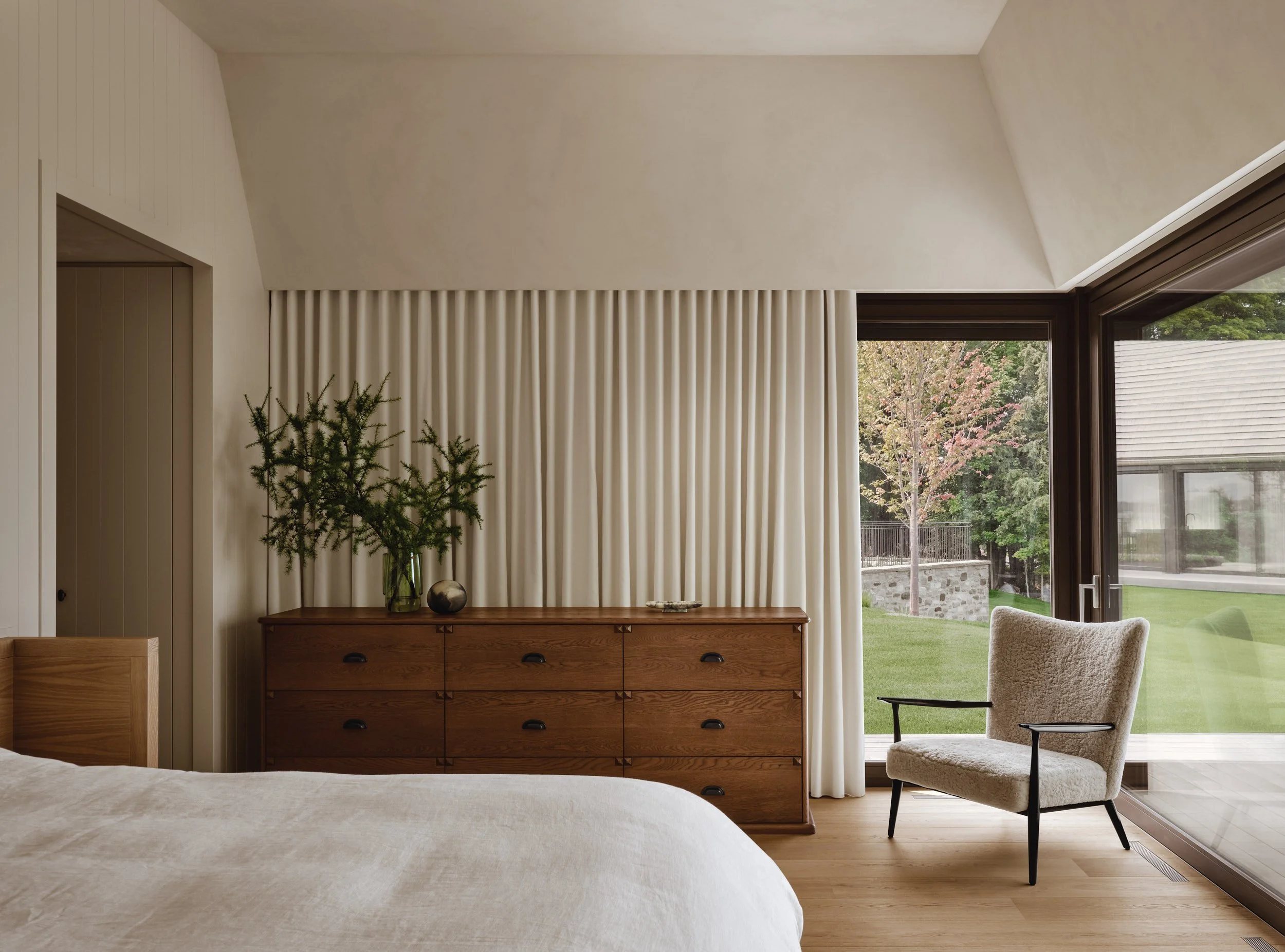
PC: AtelierCarle
Sound: Quieting Your Nervous System
Close your eyes for a moment and remember the last time you were near water—a stream, the ocean, rain on a roof. Feel your shoulders drop just thinking about it? That's your nervous system shifting out of fight-or-flight mode and into rest-and-digest.
True rest happens when your nervous system feels safe enough to let go. Silence can sometimes feel unsettling, but gentle, controlled sound helps calm your body and masks disruptions without triggering alertness.
Creating your sound sanctuary:
Add sound-absorbing layers: Thick rugs, floor-to-ceiling curtains, and upholstered headboards don't just look inviting—they physically absorb sound waves. Think of them as acoustic medicine for your sleep sanctuary.
Consider nature sounds or white noise: Studies show that noise levels in the bedroom significantly affect sleep efficiency, with proper sound masking improving sleep quality. A white noise machine or the sound of flowing water can provide consistent, soothing audio that your brain learns to ignore while masking disruptive sounds.
Remove electronics: That humming laptop charger, the buzzing from your phone on vibrate—even subtle sounds your conscious mind ignores can activate your nervous system during light sleep stages.
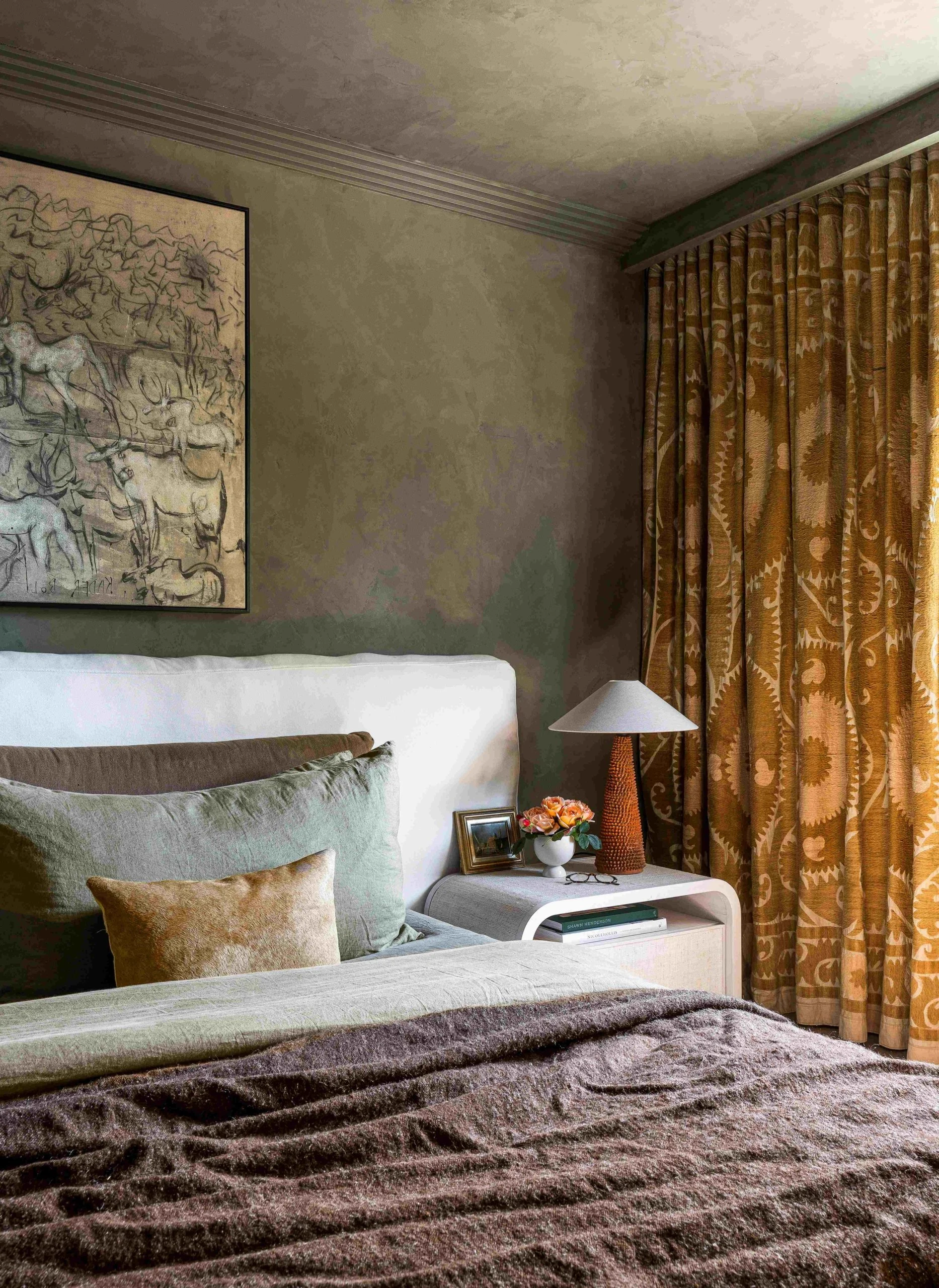
PC: Hommeboys Interiors
Materials and Color: Designing Calm Through the Senses
Run your hand across soft linen. Notice how your breathing slows? That's not coincidence—the tactile and visual cues in your bedroom directly influence how safe and calm your body feels.
When I redesigned my own space during my migraine crisis, leaning into natural, breathable materials and gentle colors made a measurable difference I could track in my migraine diary.
Your sensory bedroom design checklist:
Choose breathable, natural fabrics: Linen, organic cotton, and wool for bedding aren't just luxury—they regulate temperature and wick moisture, preventing the sleep disruptions caused by overheating. Research on bedroom thermal environments shows sleep efficiency was highest when bedroom temperatures stayed between 75-82°F (24-28°C), with sleep quality decreasing outside this range.
Embrace calming color palettes: Muted greens, soft neutrals, warm earth tones. These aren't arbitrary aesthetic choices—they're colors that don't stimulate alertness. Think of the colors you see in nature during restful moments: misty mornings, forest floors, sandy beaches at dusk.
Minimize pattern and clutter: Your eyes process visual information even during the transitional moments before sleep. Busy patterns and visible clutter keep your cognitive systems activated when they should be winding down.
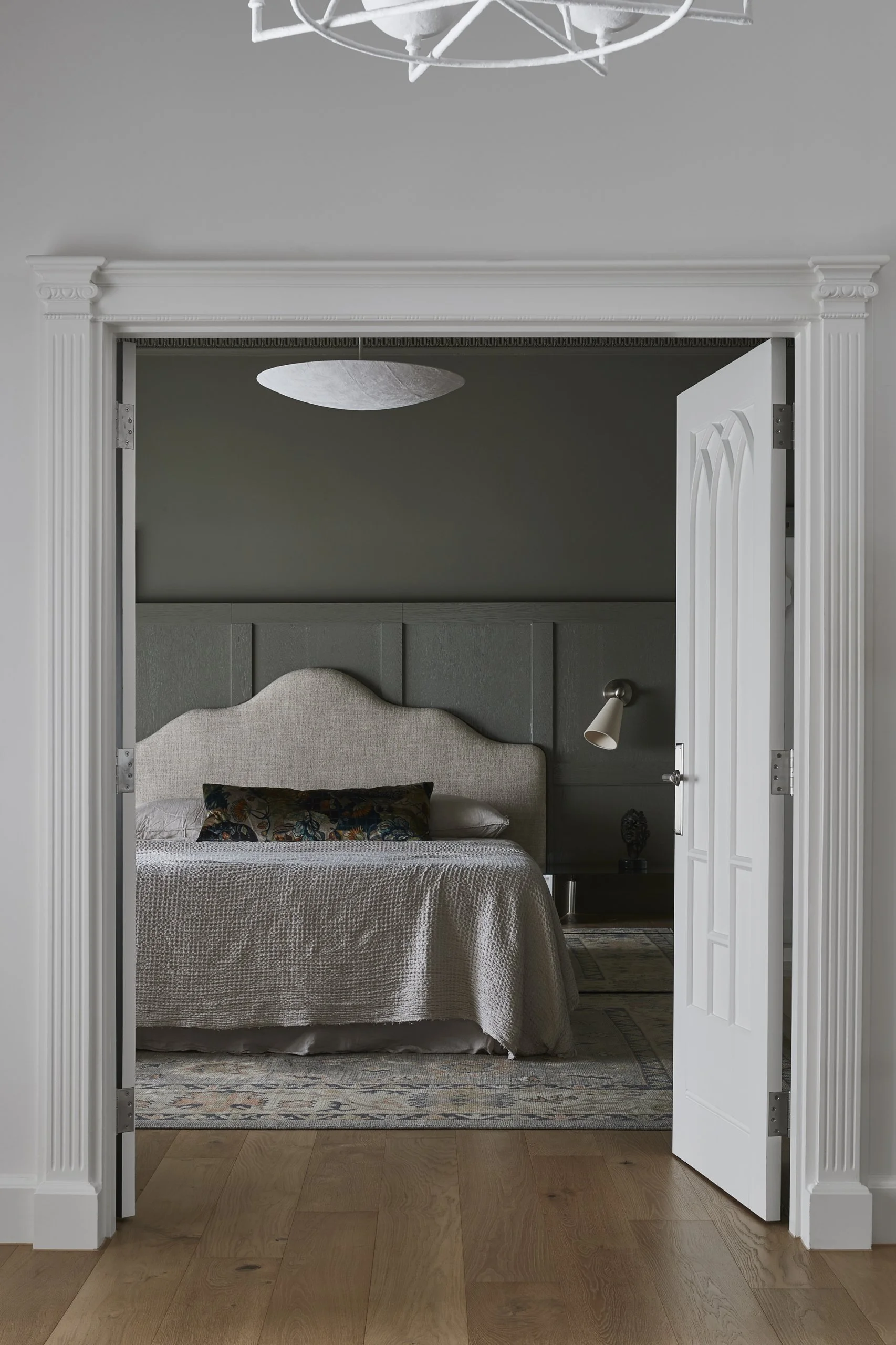
PC: Hecker Guthrie
Air Quality: Breathe Easy While You Sleep
Here's what I learned the hard way: air quality is not optional, it's essential. For years, I lived in a mold-contaminated environment, and my body paid the price with chronic illness. I now see the home as a member of the care team, and breathing clean air is foundational medicine.
Take a deep breath right now. Really fill your lungs. That's the quality of breath your body deserves every moment of sleep—and it directly affects how well you rest.
Field studies examining bedroom air quality found something remarkable: better ventilation and lower CO2 levels (around 835 ppm versus 2,395 ppm) significantly improved both sleep quality and next-day cognitive performance. Think about that: the air you breathe while unconscious determines how clearly you think the following day.
Another major study tracking bedroom environment and sleep found that for every increase in particulate matter (PM2.5), temperature, and CO2, sleep efficiency decreased significantly—with air quality showing the strongest effect.
Your clean air sleep strategy:
Add air-purifying plants: Snake plants, peace lilies, and pothos aren't just beautiful—they actively filter toxins and produce oxygen. Think of them as living, breathing air purifiers that never need to be plugged in.
Use low-VOC paints and finishes: When you're renovating or refreshing your bedroom, choose paints and finishes labeled low-VOC or zero-VOC. These reduce the off-gassing of harmful chemicals that can irritate airways and disrupt sleep.
Crack a window when weather allows: Fresh air circulation is free medicine. Studies comparing ventilated versus closed bedrooms found that bedroom ventilation was a dominant factor affecting sleep quality, with participants reporting noticeably better sleep when adequate fresh air circulation was maintained.
Consider an air purifier: If you live with pets, allergies, or in an area with poor outdoor air quality, a quality HEPA air purifier can make a measurable difference in your sleep sanctuary.
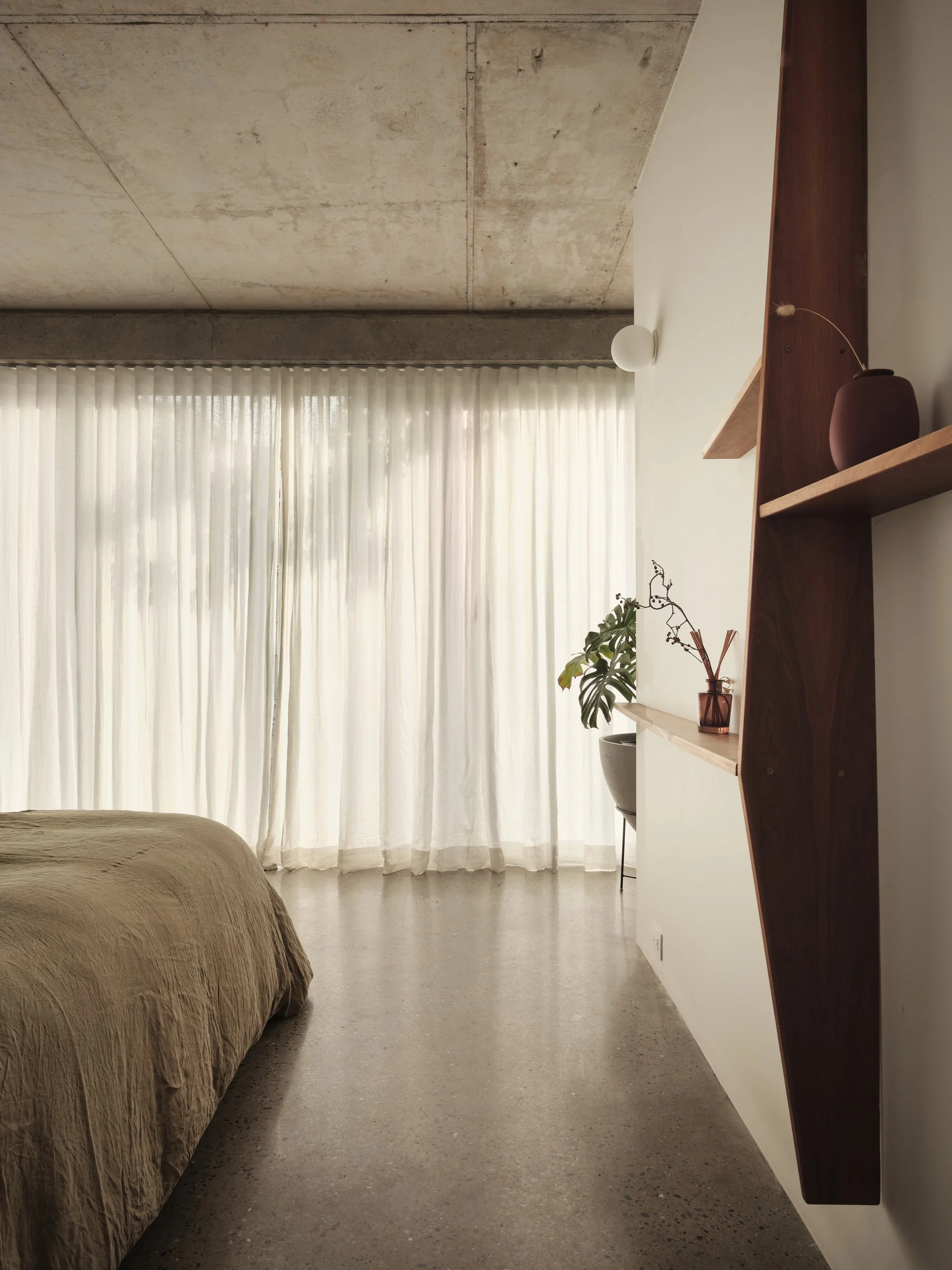
PC: Alexandre Bernier Architecte
Temperature: The Goldilocks Zone for Sleep
You've experienced this: you finally fall asleep, then wake up an hour later either shivering or sweating. Research on bedroom temperature and sleep quality shows that for every 1°C (about 2°F) rise in bedroom air temperature, sleep efficiency decreases by approximately 0.16%. That might sound small, but over the course of a night, it adds up to significant sleep disruption.
A large study on thermal perception found that people who frequently felt cold in the bedroom showed significantly poorer sleep quality, with effects persisting across all age groups and demographics. But it's not just about being too cold—sleep efficiency decreases when temperatures move beyond the neutral range of 75-82°F, with both heat and excessive cold disrupting your natural sleep architecture.
Temperature optimization strategies:
Keep bedroom cooler than living spaces: Most sleep experts recommend 60-67°F (15-19°C) for the bedroom. This might feel surprisingly cool when you first get into bed, but remember—your body temperature naturally drops as you fall asleep.
Layer your bedding: Instead of one heavy comforter, use layers you can adjust. This gives you control throughout the night as your body temperature fluctuates through different sleep stages.
Consider material carefully: Natural fibers like cotton, linen, and wool regulate temperature better than synthetics, helping maintain that perfect microclimate around your body.

PC: Atelier
Rituals and Sanctuary: Personal Touches That Signal Rest
Think about the moment when you light a candle at day's end. That transition from productive mode to rest mode—your body craves these signals.
Sleep hygiene is a self-care practice, and your environment can amplify it exponentially. In my experience, even a small "refuge corner" became the cue that told my nervous system it was safe to release the day and let healing begin.
Creating your bedtime ritual space:
Designate a sanctuary space: A comfortable reading chair with a soft throw, your journal, a small table for herbal tea. This becomes your transition zone—the place where the day ends and rest begins.
Choose calming artwork intentionally: Place a nature photograph or peaceful artwork where your eyes naturally land before sleep. Let it be the last thing your conscious mind processes before drifting off.
Remove devices from the bedroom: A fascinating study on light exposure and sleep found that using smartphones in bed before sleep predicted circadian phase delays and reduced sleep quality, with measurable effects on memory and concentration the following day. Reserve this space exclusively for rest and connection.
Try a simple wind-down cadence: Dim the lights 60-90 minutes before bed → warm shower or herbal tea → 10-15 minutes of reading or breathwork in your refuge chair → bed. Your body will begin to recognize and respond to this sequence.
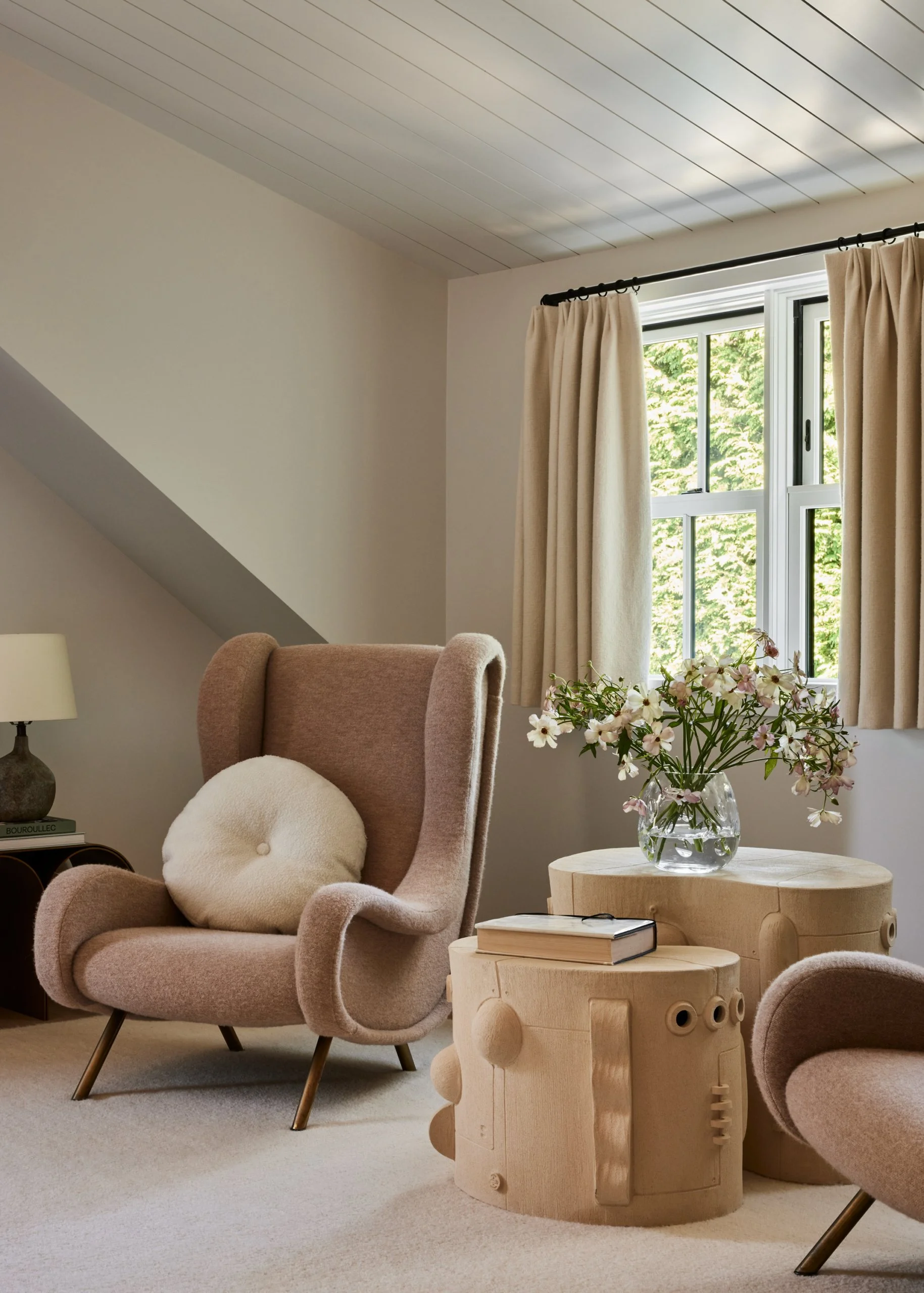
PC: ALT for Living
“The most underutilized therapy out there isn’t a pill—it’s the environment we live in. When we combine optimized spaces with good self-care and medical guidance, the benefits multiply.”
Start Where You Are
You don't need a complete bedroom overhaul to start experiencing better sleep tonight. Even small shifts—swapping one light bulb for a warmer tone, adding a single plant, or simply removing your phone charger from the nightstand—can begin to transform your nights.
At Dayhouse, we believe your home is medicine. When designed with intention, it becomes a healing partner in your daily rhythms—especially the most important rhythm of all: rest.
Your bedroom design for better sleep isn't about perfection. It's about partnership. Your space can work with your body, not against it.
Common Questions About Sleep-Friendly Bedroom Design
-
Warm-toned, dimmable lights with color temperatures between 2700-3000K for evening hours, complete darkness during sleep, and bright natural light exposure in the morning.
-
Yes, when used intentionally. Essential oils like lavender have been shown to promote relaxation. Avoid synthetic fragrances and ensure good ventilation.
-
Focus on what you can control: bedding, lighting (portable lamps with dimmers), blackout curtain clips, plants, and air purifiers. These require no permanent changes but deliver significant impact.
-
No. Start with the free changes: removing electronics, adjusting your curtains, improving ventilation. Prioritize one upgrade at a time based on what disrupts your sleep most.
Ready to transform your bedroom into a healing sanctuary? Explore our Home Is Medicine issue of Dayhouse Living for more inspiration. If you'd like personalized support designing a restorative bedroom tailored to your sleep and well-being goals, Dayhouse Studio can help you create a space that truly heals.
Research & Sources
This article draws on peer-reviewed research from:
RAND Corporation's comprehensive analysis on the economic costs of insufficient sleep across OECD countries
Centers for Disease Control and Prevention (CDC) sleep statistics and public health data
Studies published in Sleep, Sleep Health, Indoor Air, Scientific Reports, and Chronobiology International
Research from the Sleep Foundation, American Academy of Sleep Medicine, and National Sleep Foundation
Field studies on bedroom environment and sleep quality from institutions including Technical University of Denmark, Beijing University of Technology, and multiple university sleep research centers
All facts and statistics cited represent current peer-reviewed scientific consensus. For complete citations and deeper exploration of sleep science, visit our Resources page.